
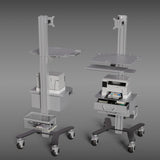
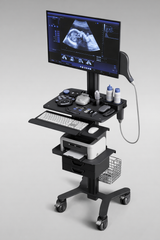
Ask about HSM-3 Medical Computer and Diagnostic Equipment Cart
Need Help?
Get the right model recommendation.
Send your quantity, use case and accessories needed. Rife will suggest the correct configuration.
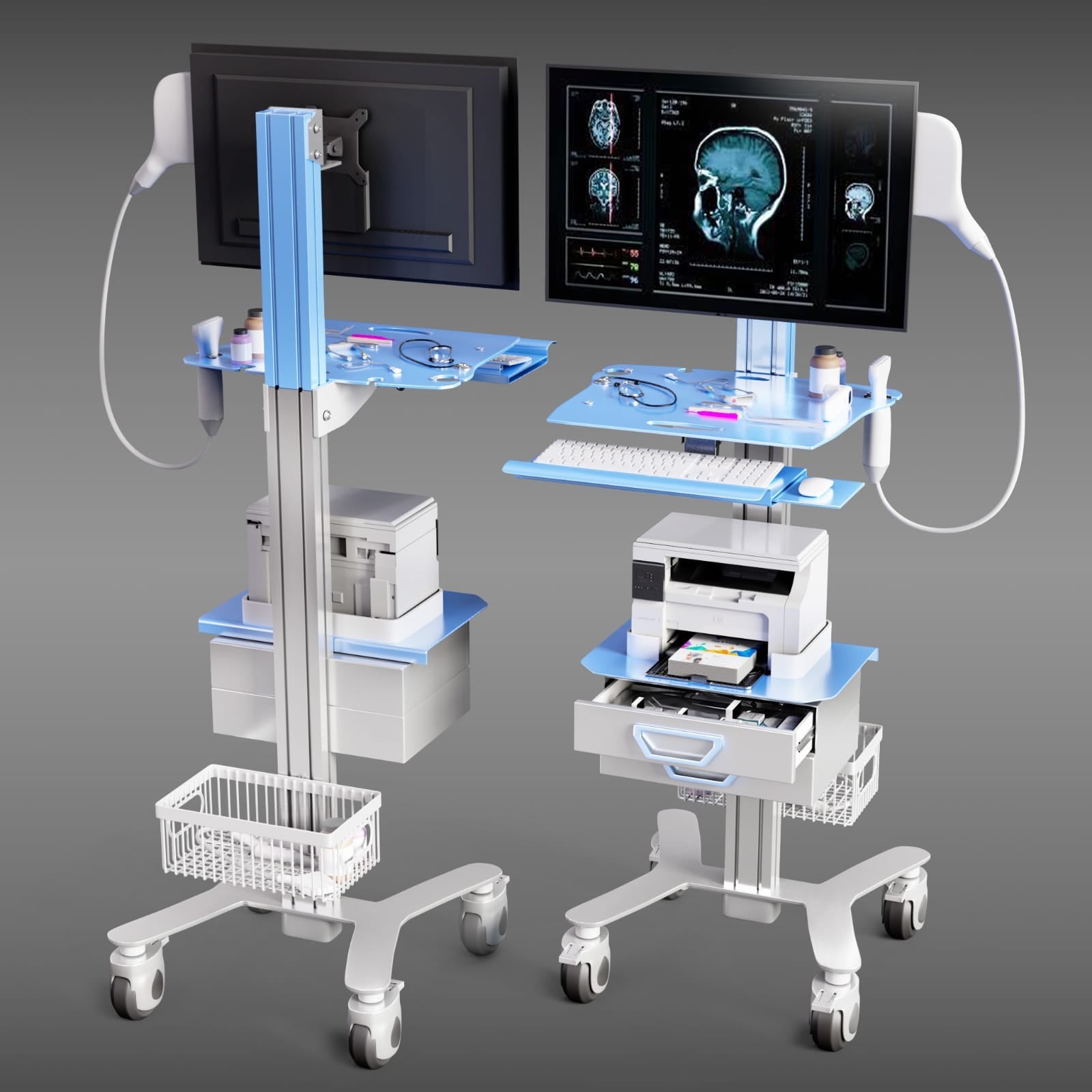
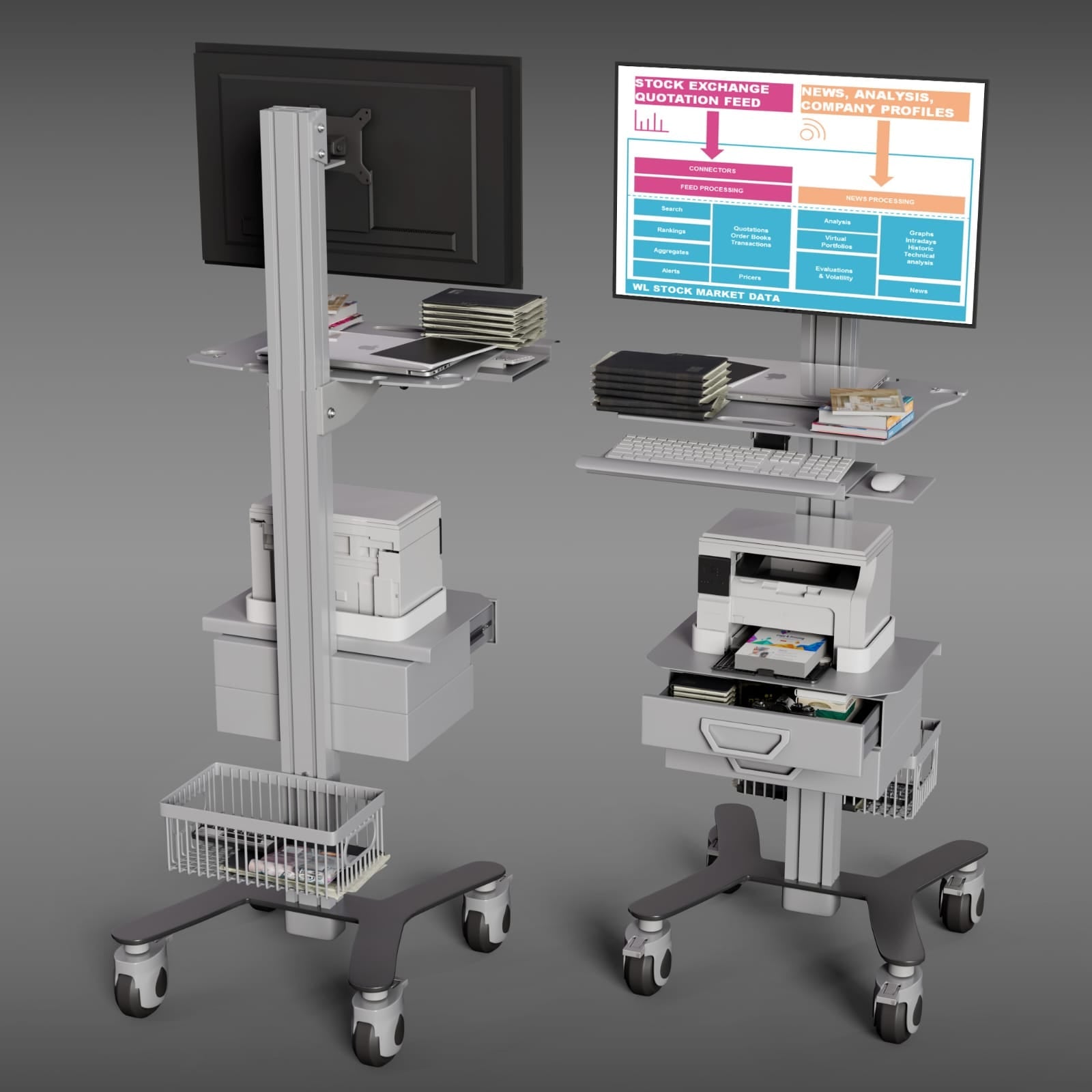
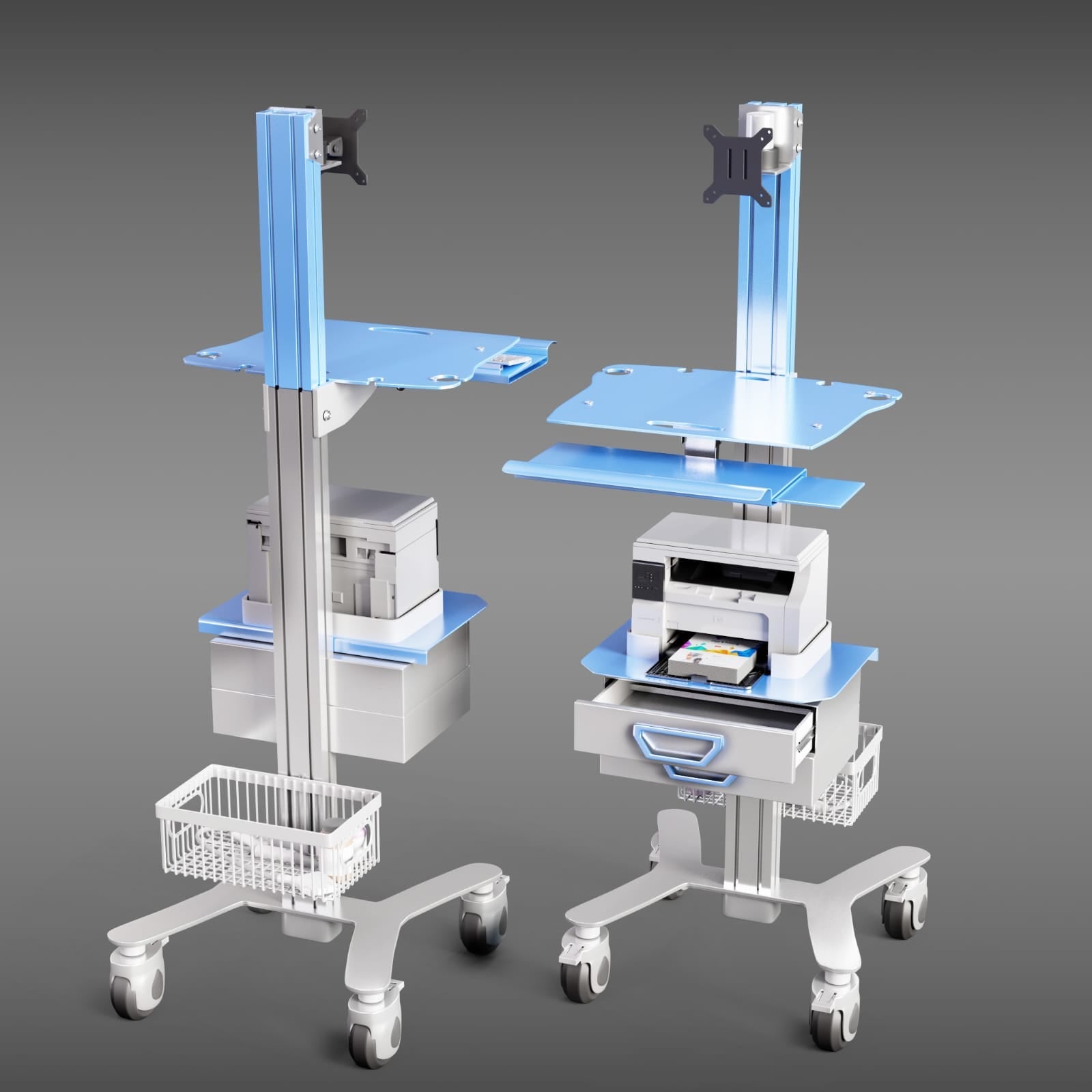
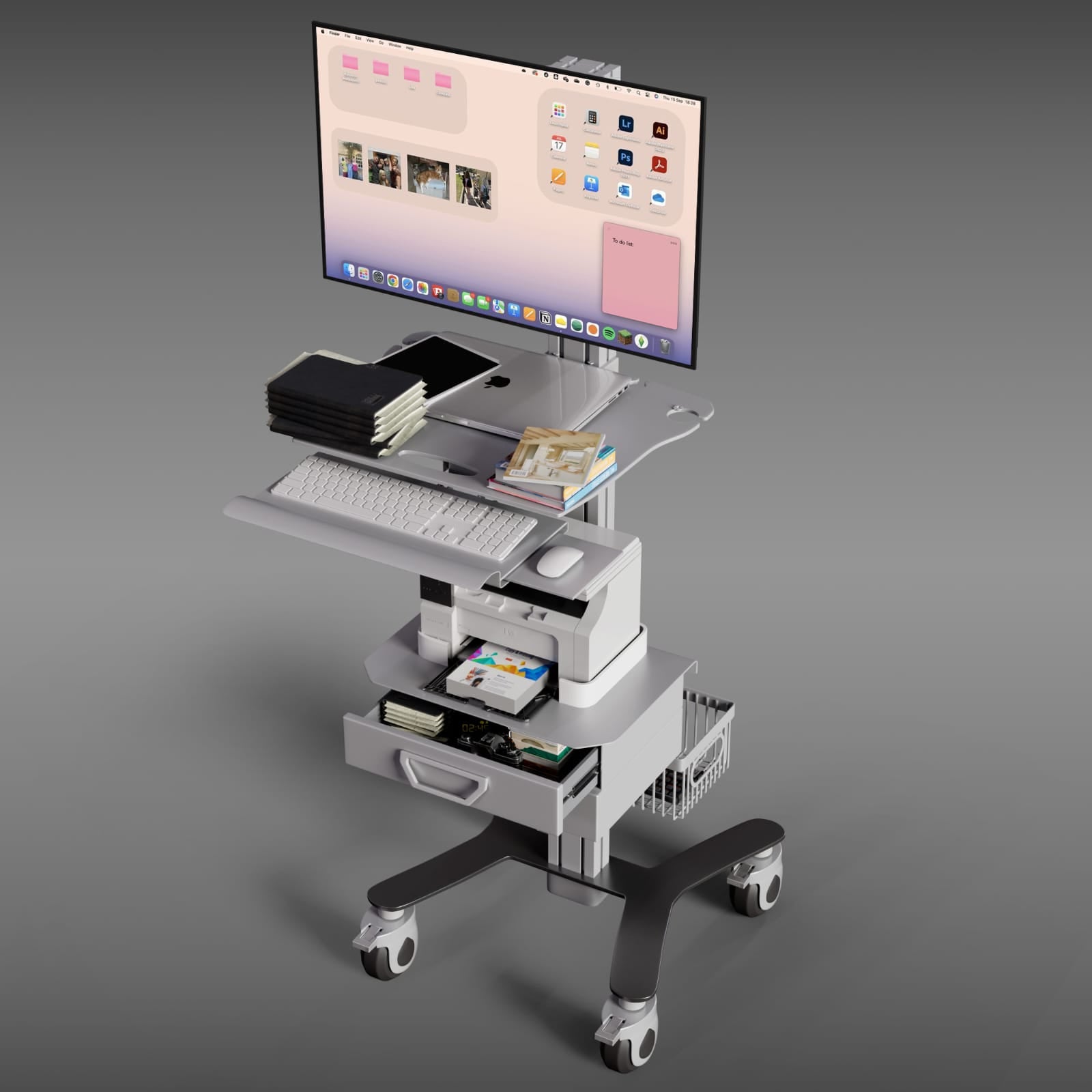
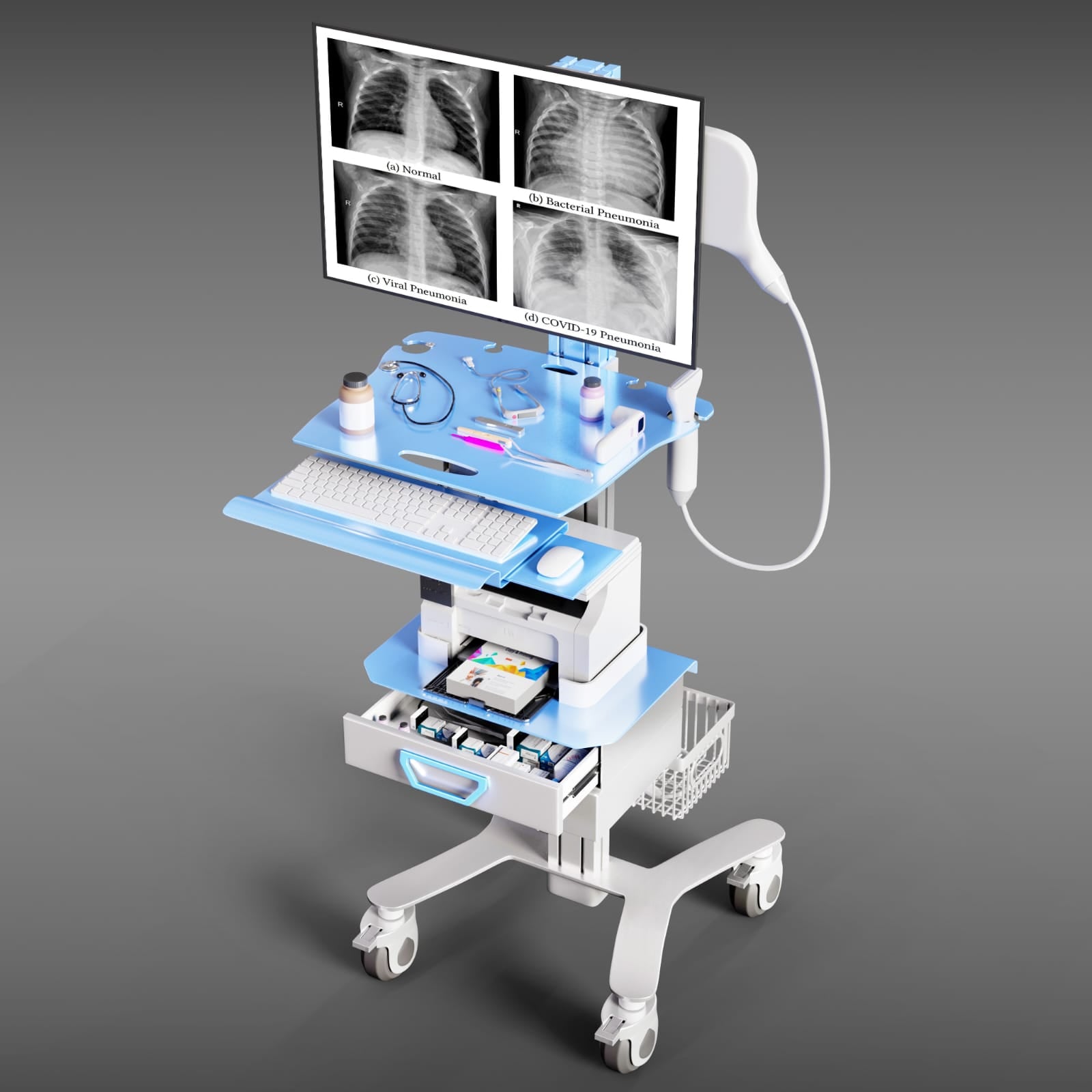
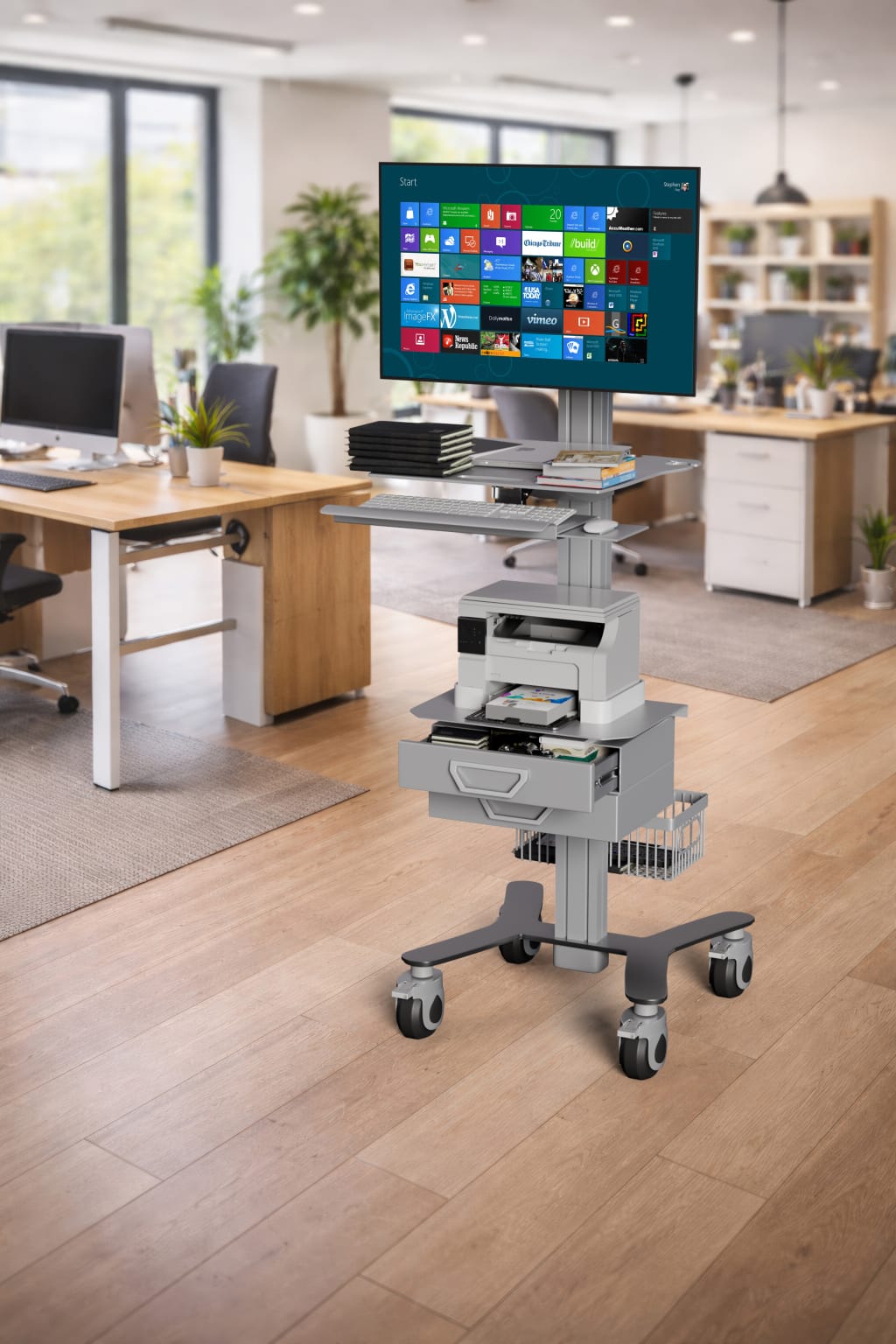
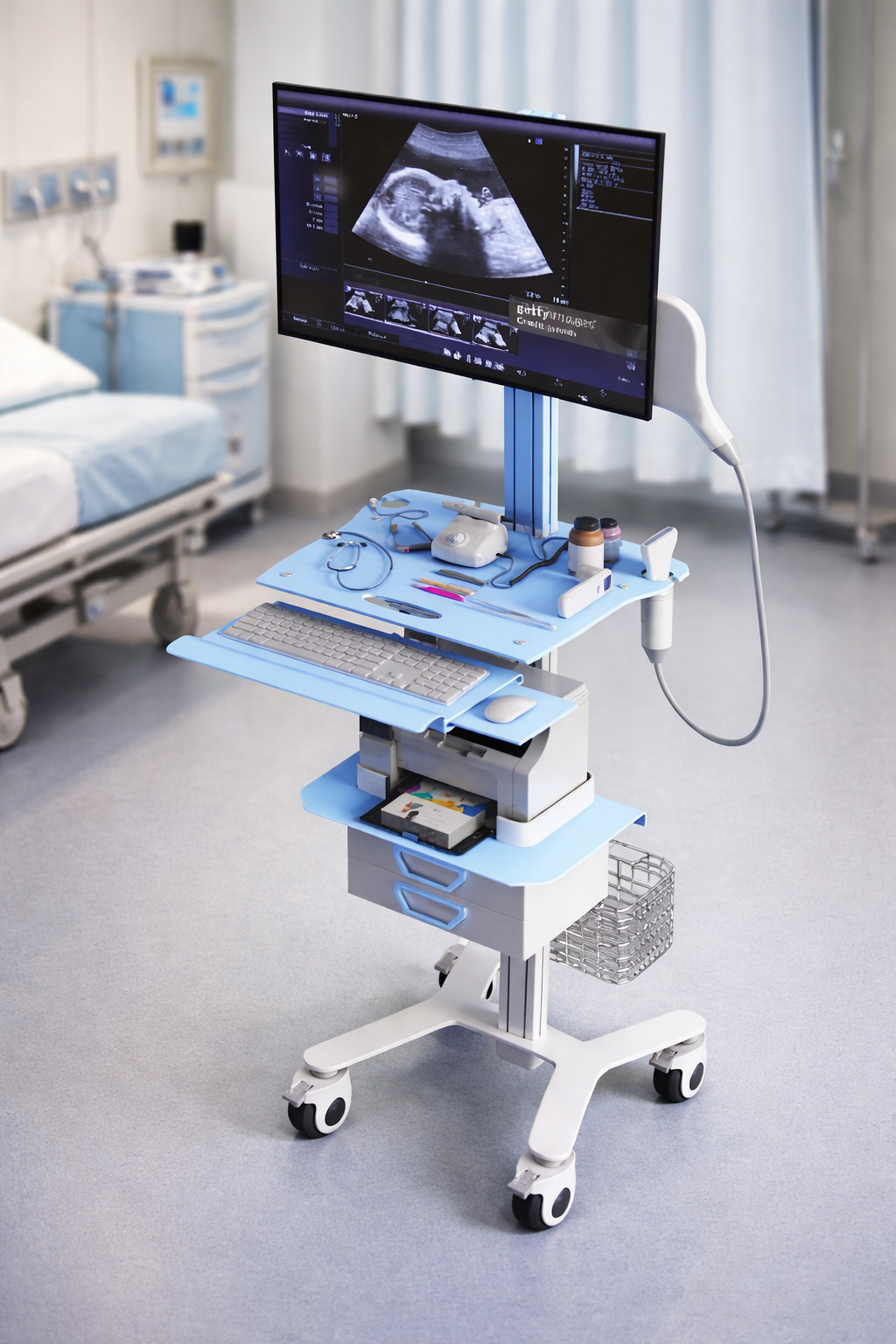
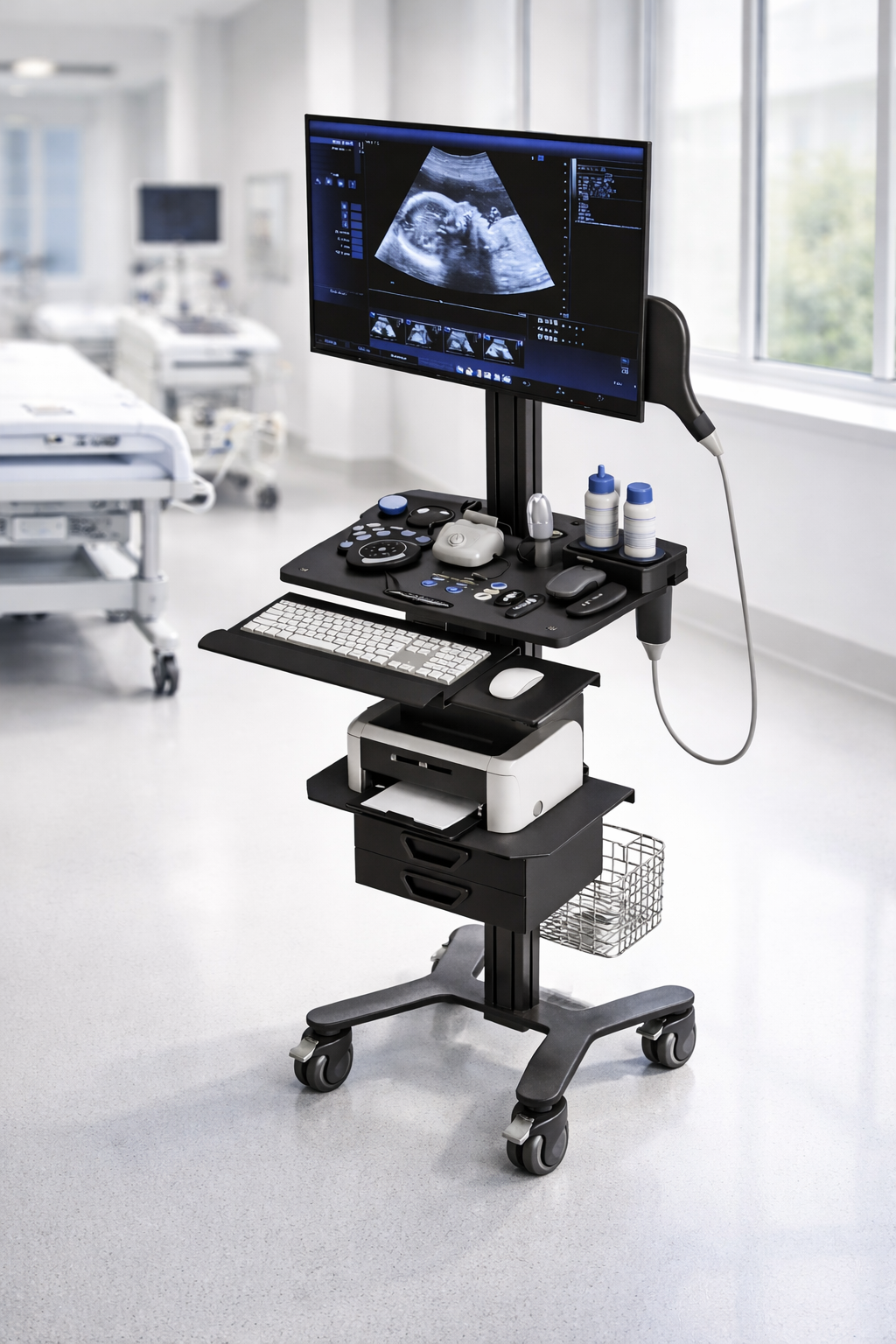
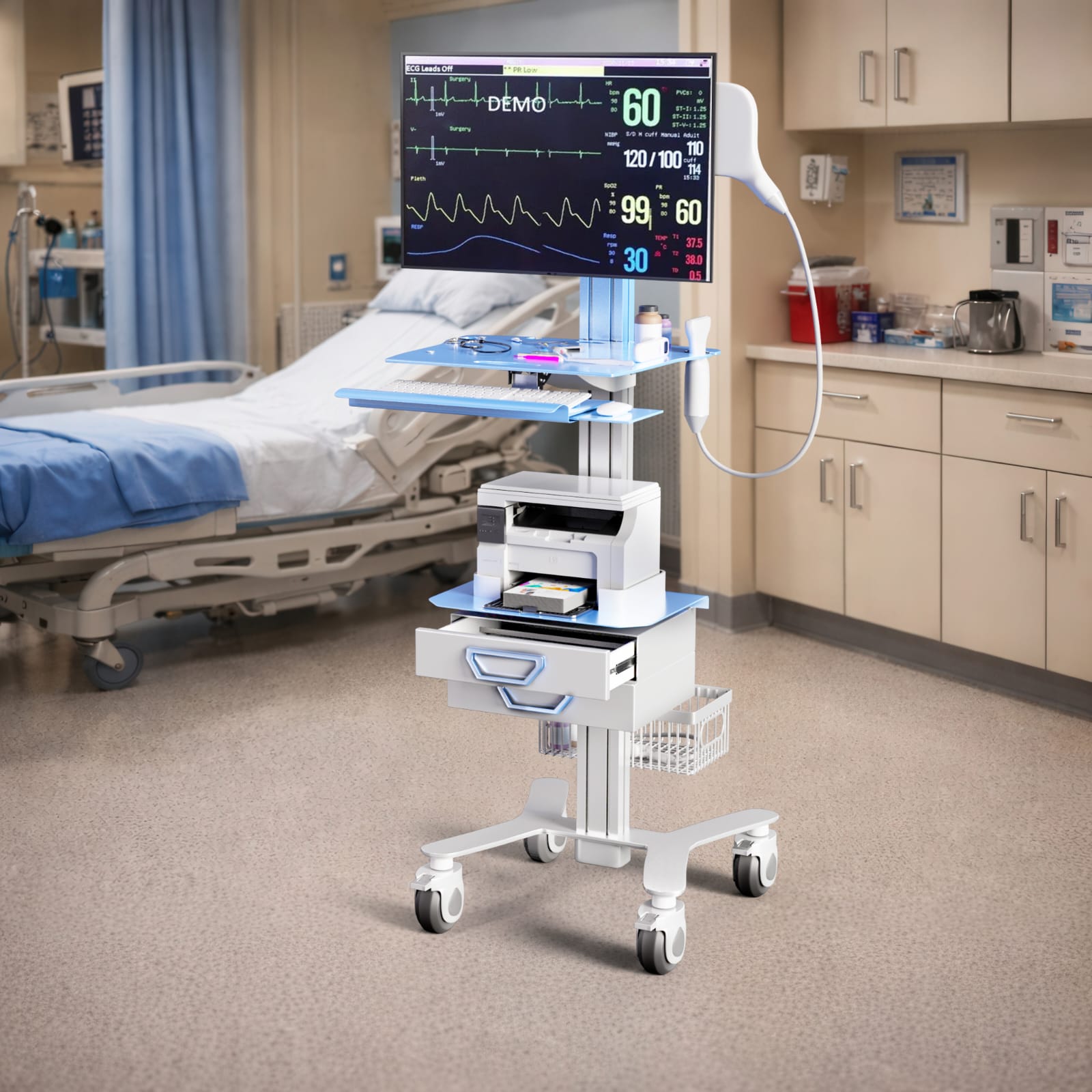
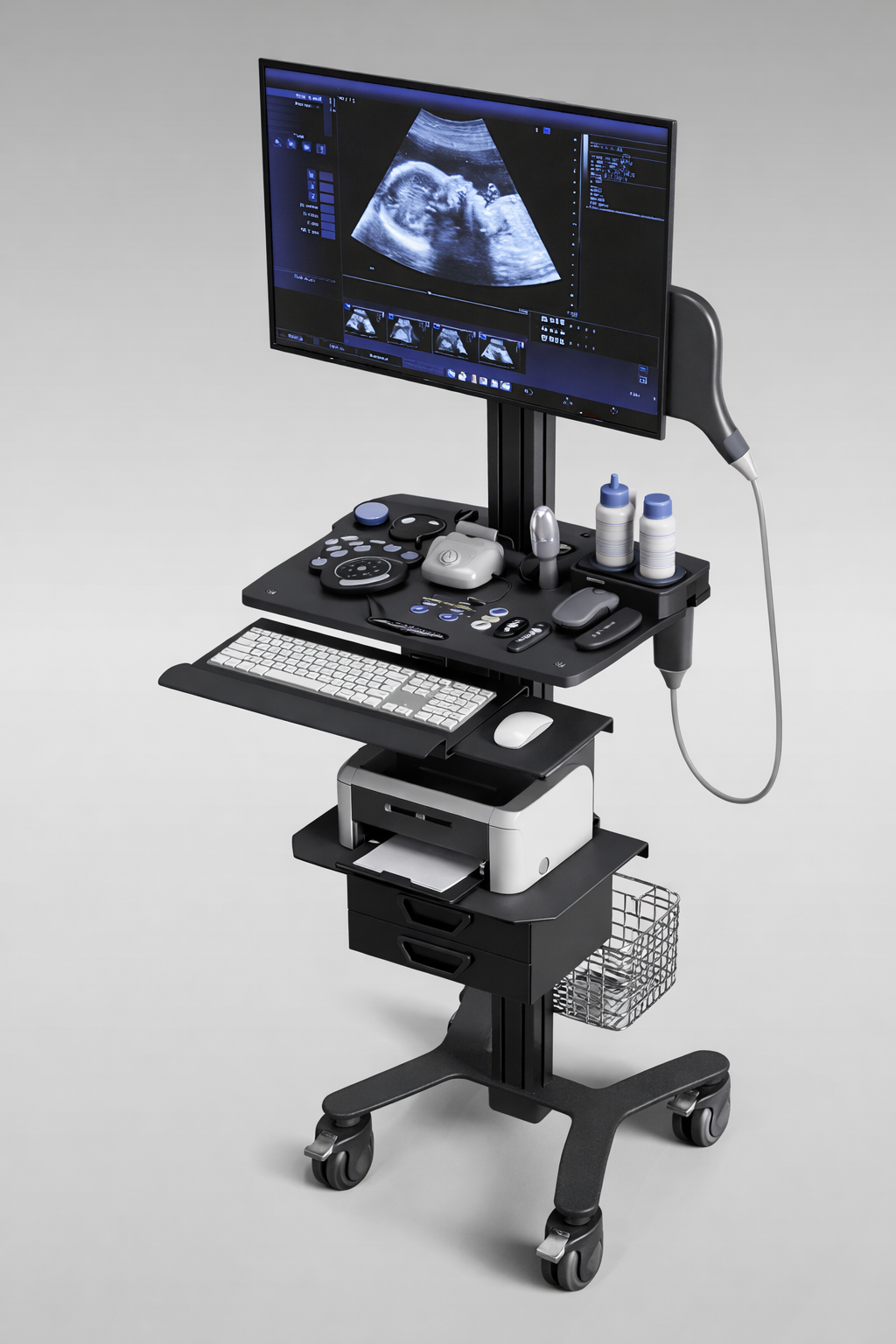
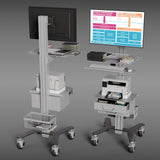
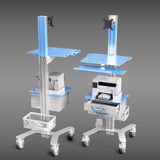
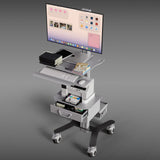
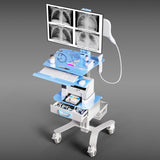
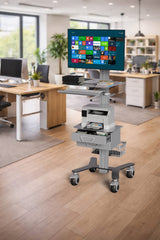
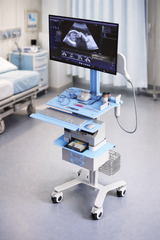
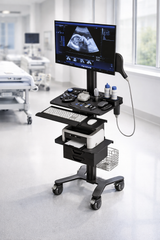
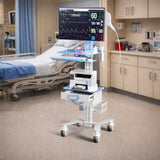
HSM-3 — The RIFE HSM-3 is a height-adjustable medical computer and diagnostic equipment cart. It provides a stable mobile platform for a display, laptop or selected diagnostic equipment, with open storage for accessories that need to remain accessible during the workflow.
What Makes the HSM-3 Different?
HSM-3 is intended for equipment-led applications rather than only documentation. Its layout can be reviewed around a diagnostic device, monitor and accessories, making load distribution and centre-of-gravity assessment especially important.
Designed Around the Working Workflow
Diagnostic departments often need equipment positioned close to the patient or test area without permanently installing a workstation in every room. A mobile cart can consolidate the display, input devices, small accessories and cables into one reviewed configuration.
The medical environment, equipment list and cleaning protocol vary from project to project. The cart should therefore be selected as a configured workstation rather than assumed to be a universal off-the-shelf frame.
Key Features
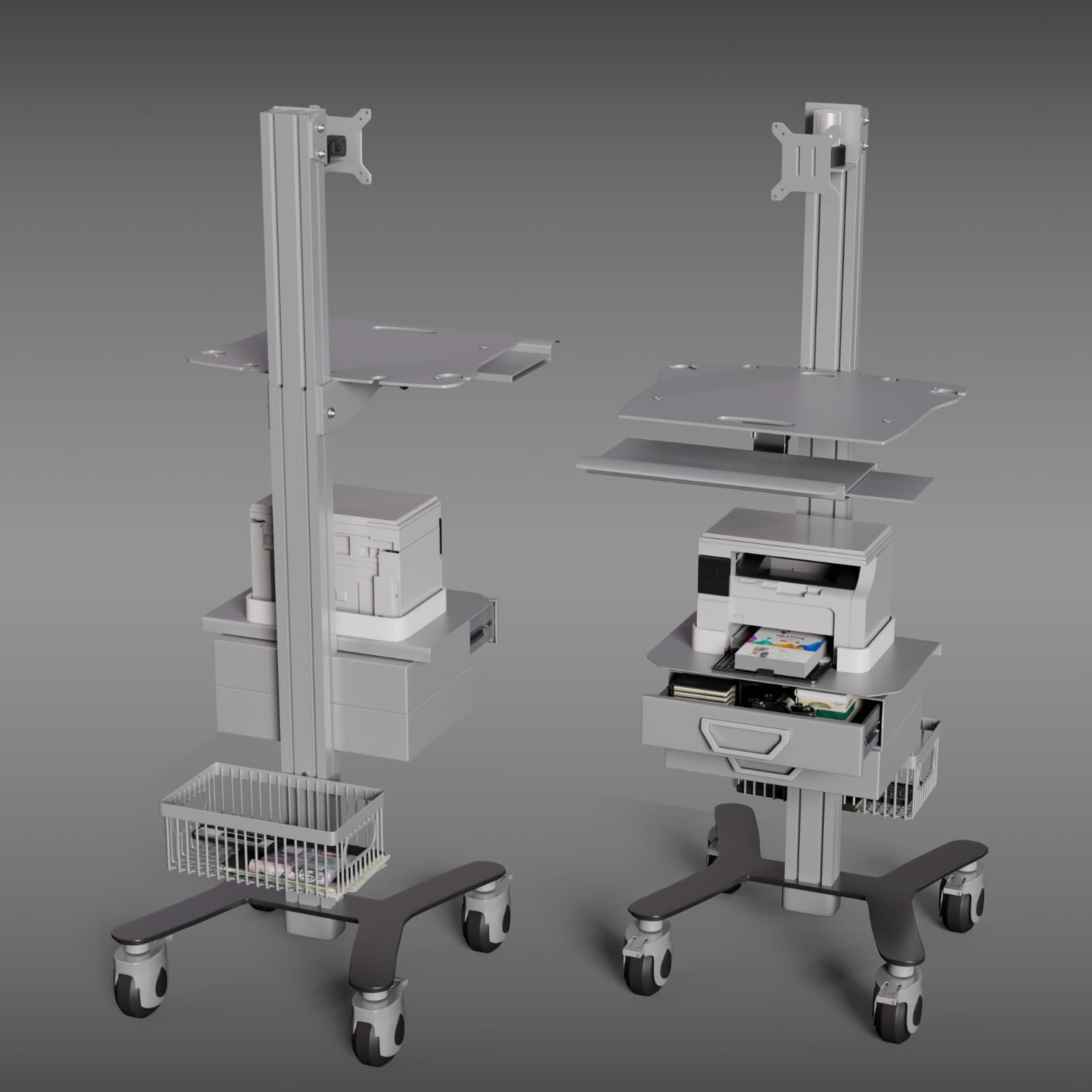
- Height-adjustable diagnostic workstation
- VESA monitor mounting with dual-display options
- Open bucket and shelf storage
- Low-profile anti-tip base
- Total-lock castor options
- Internal cable routing
- Custom work-surface and accessory brackets
Technical Specifications and Configuration Range
The following details are retained from the existing product specification and presented as configuration ranges. They must be verified against the final equipment list and quotation before ordering.
| Height adjustment | Manual, gas-spring-assisted or electric actuator options, depending on approved configuration |
|---|---|
| Indicative height range | Approximately 750–1200 mm in the existing product specification; final range to be confirmed |
| Column construction | Extruded aluminium telescopic column with powder-coated or anodised finish options |
| Indicative column load | Approximately 25–40 kg depending on lift mechanism, equipment layout and centre of gravity |
| Base | Reinforced mild-steel, low-profile anti-tip base with powder-coated finish |
| Castors | Four swivel castors with total-lock options; 75 mm or 100 mm wheel options referenced in the existing specification |
| Worksurface options | Approximately 600 × 450 mm or 700 × 500 mm, with custom sizes subject to project review |
| Indicative worksurface load | Approximately 20–30 kg, subject to equipment distribution and approved configuration |
| Display compatibility | VESA 75 × 75 mm and 100 × 100 mm options |
| Indicative monitor range | 17–32 inches, subject to monitor weight, arm selection and stability review |
| Cable management | Internal or integrated routing provisions for power and data cables |
| Finish | Industrial powder coating with black, white or project-specific RAL colour options |
Ergonomics, Stability and Mobility
The workstation should place the display, laptop or input devices at a comfortable working height while maintaining a stable centre of gravity. Height adjustment is useful for shared workstations, but the selected lift mechanism must be matched to the total load. Castor diameter and material should reflect the flooring, thresholds and travel distance. Locking castors secure the cart during data entry or equipment use, while the low-profile base helps the cart approach beds, desks or work counters.
Device Integration and Cable Management
Before production, RIFE should receive the device model, display size, VESA pattern, computer or CPU dimensions, charger details, cable connections and required accessories. This information is used to review mounting, ventilation, cable slack, power distribution and access. A neat cable path is particularly important on an adjustable cart because cables must remain protected through the complete height and movement range.
Applications
- Diagnostic clinics
- Imaging review stations
- Specialist consultation rooms
- Laboratory and testing workflows
- Mobile equipment-control stations
The listed applications are examples. Final suitability depends on equipment weight, infection-control or cleaning requirements, electrical requirements and the operating process at the installation site.
How to Specify the Correct Cart
- List every device and accessory that will be carried.
- Provide dimensions, weight, VESA pattern and cable connections.
- Confirm the required sitting and standing work heights.
- Describe the route, floor type, thresholds and lift access.
- Identify storage, locking, scanner, printer or power requirements.
- Confirm the quantity, delivery city and required project schedule.
Related Mobile Workstations
Request a Techno-Commercial Quotation
Request a quotation for the HSM-3. Share the intended application, equipment list, quantity, installation city and required accessories. RIFE can then review the cart as a complete workstation and recommend the appropriate height adjustment, mounting, storage, castors, cable management and power configuration.
Frequently Asked Questions
What diagnostic equipment can be mounted?
Suitability depends on equipment dimensions, weight, mounting points, cable connections and centre of gravity.
Can HSM-3 support dual monitors?
Dual-display options are referenced, subject to a stability review and the selected monitor arms.
What storage is included?
Open bucket and shelf options support quick access to accessories. A project-specific layout can be discussed.
Is the cart supplied with the computer?
The cart and mounting configuration can be quoted according to the project. Computer equipment is included only when explicitly stated in the quotation.