Autonomous Mobile Robots in Retail Delivery: Improving Item Movement Inside Modern Stores

Retail environments require constant movement of products between storage areas, shelves, checkout zones, and customer service points. As store layouts grow larger and inventory cycles become faster, the need for efficient internal delivery systems becomes more noticeable. Autonomous mobile robots designed for indoor transportation offer a structured way to manage these repetitive tasks while maintaining consistency in operations.
This article explores how autonomous delivery robots support retail stores by enabling controlled item movement, reducing manual effort, and improving coordination across different sections of a store.

Understanding Autonomous Delivery Robots in Retail Spaces
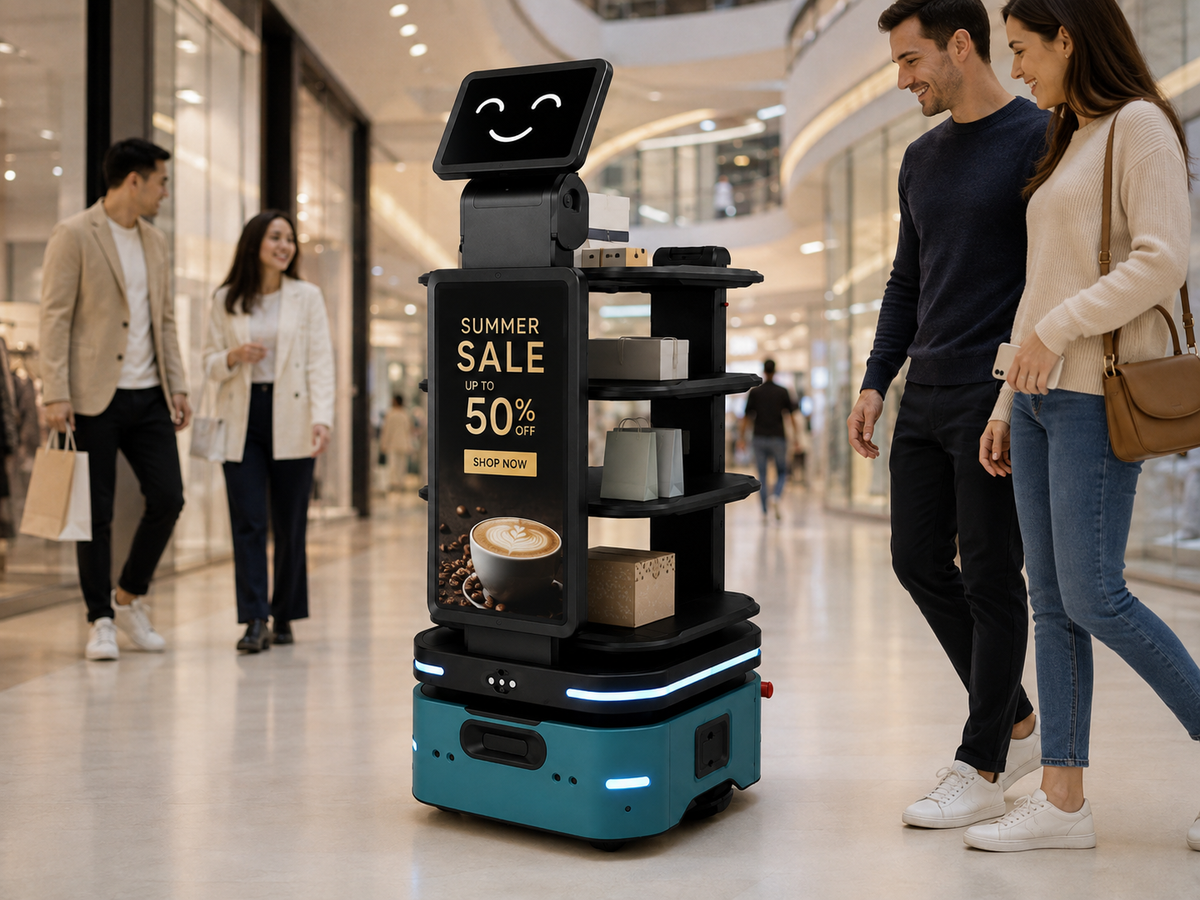
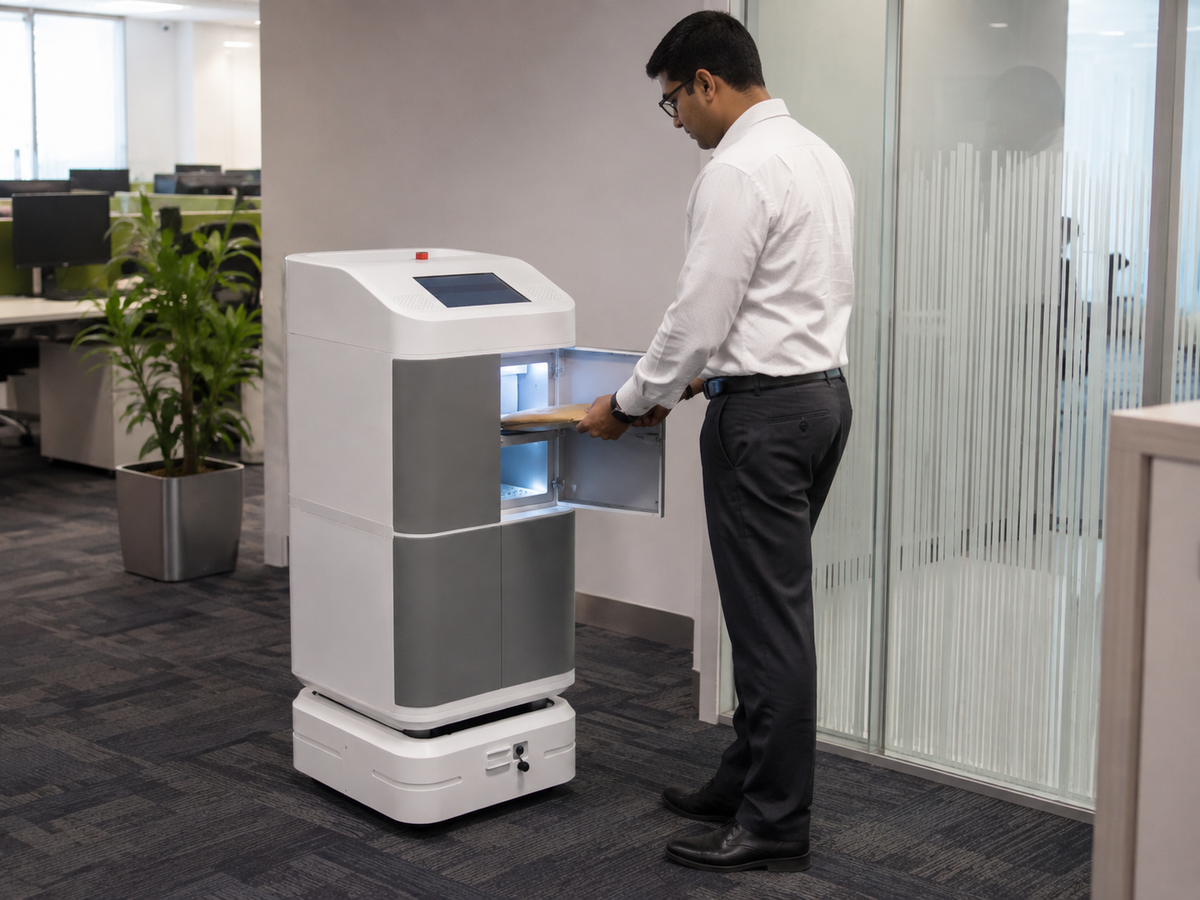
Autonomous delivery robots are compact mobile units equipped with sensors, navigation systems, and programmable routes. Their purpose is to transport goods safely across indoor environments without constant manual control. In retail stores, these robots can move packaged items, restocking supplies, or customer orders between departments.
The robotic platform uses a combination of LIDAR, SLAM mapping, and computer vision to understand indoor layouts and avoid obstacles. This allows the robot to navigate narrow aisles, corners, and crowded pathways commonly found in retail environments.
Unlike traditional trolleys or manual carts, an autonomous system follows pre-defined routes or responds to task requests from a mobile interface, enabling staff to assign delivery jobs without physically pushing equipment.
Navigation and Safety Inside Retail Aisles
Retail stores often have changing layouts due to seasonal displays, promotional setups, or restocking activities. Autonomous robots address this challenge through real-time environmental sensing. The onboard sensor suite includes LIDAR, depth cameras, ultrasonic sensors, and inertial measurement units, helping the robot detect obstacles and adjust movement paths.
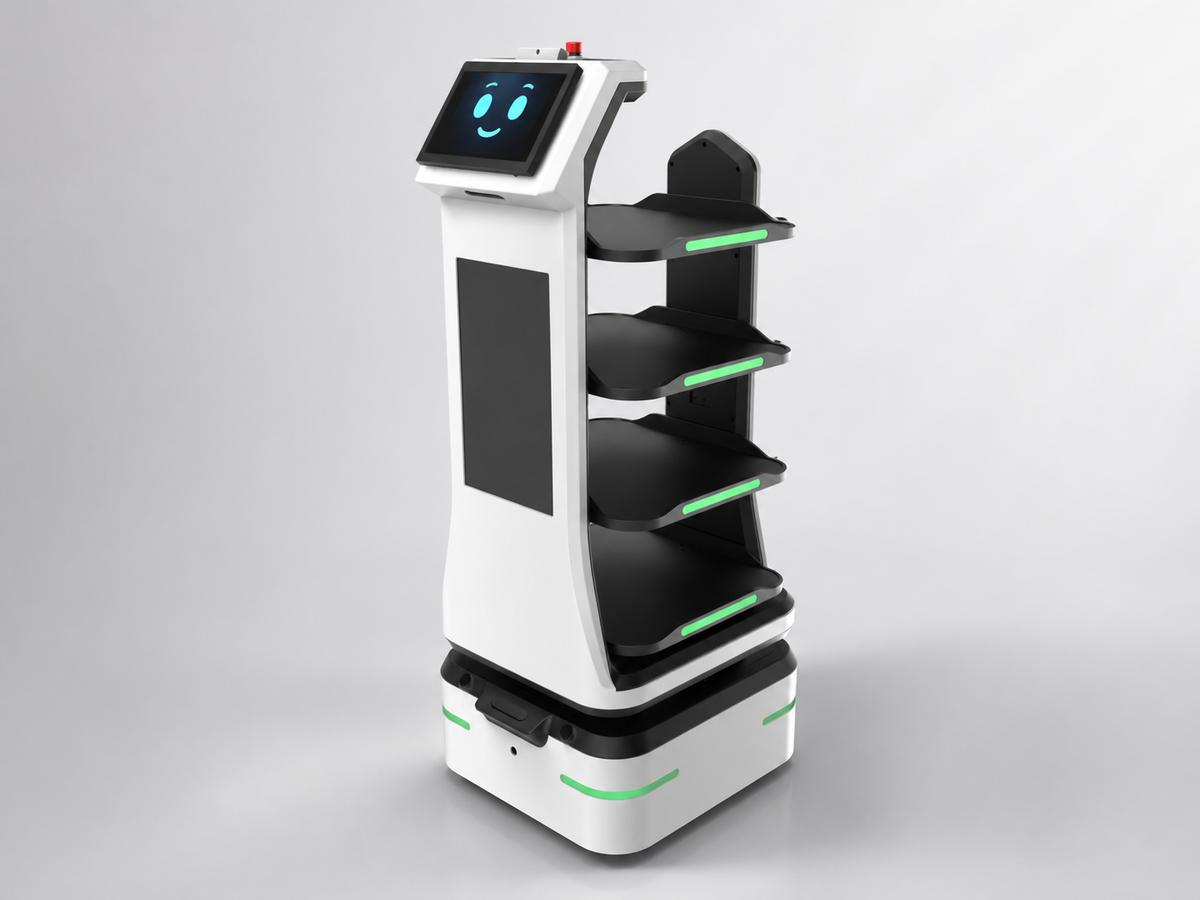
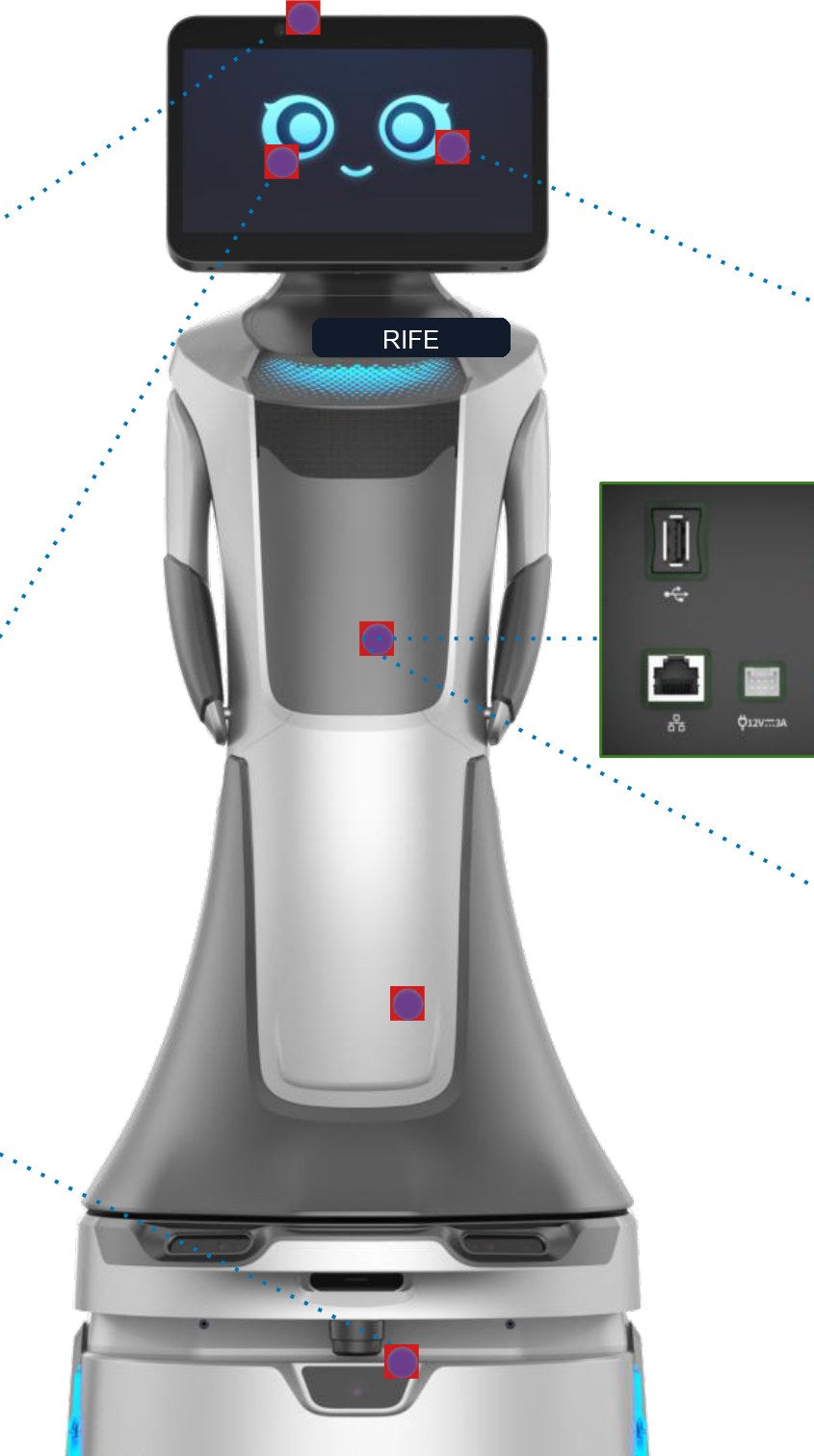
Safety features are an important part of operating in customer-facing spaces. Integrated emergency stop controls, LED indicators, and voice alerts allow staff and customers to remain aware of the robot’s presence. These systems reduce the chances of accidental collisions while maintaining smooth movement during busy store hours.
Because retail environments include both employees and customers, predictable movement patterns and controlled speeds are essential. With a top speed around 1 meter per second, the robot balances efficiency with safe indoor operation.
Carrying Capacity and Practical Retail Applications
One of the key roles of an autonomous mobile robot in retail is transporting multiple items at once. With a load capacity of approximately 100 kilograms, the robot can move cartons, packaged products, or replenishment stock between backrooms and sales floors.
Typical retail uses include:
-
Restocking shelves during low-traffic hours
-
Delivering online pickup orders from storage areas to customer service counters
-
Moving promotional materials or seasonal products across departments
-
Supporting inventory counting by carrying scanned items
The integrated load sensors help monitor weight distribution, ensuring stable movement even when carrying mixed retail goods.
By automating repetitive transport tasks, staff members can focus on customer assistance, merchandising, or operational supervision rather than manual item movement.
Follow-Me and Remote Task Management
Retail employees frequently need assistance when handling large batches of items. A follow-me feature allows the robot to track a designated person using onboard cameras, moving alongside them as they collect products across different aisles. This approach reduces the need for staff to repeatedly return to storage areas while picking items.
Remote monitoring through an administrative mobile interface provides another level of operational control. Store managers can assign delivery routes, check robot status, or initiate tasks without being physically present near the machine.
Cloud synchronization and API connectivity also enable integration with existing retail management systems. For example, a store’s inventory software could trigger a delivery task automatically once stock levels fall below a certain threshold.

Battery Performance and Continuous Store Operations
Retail operations often run for extended hours, requiring equipment that can function reliably throughout the day. The autonomous robot operates for approximately eight hours on a single charge, allowing it to support multiple delivery cycles within one shift. Charging options include both auto-docking and manual charging methods, which help maintain uptime without interrupting store activities.
This level of battery performance makes the robot suitable for large retail environments such as supermarkets, department stores, or warehouse-style outlets where continuous internal logistics are necessary.
Design Considerations for Retail Environments
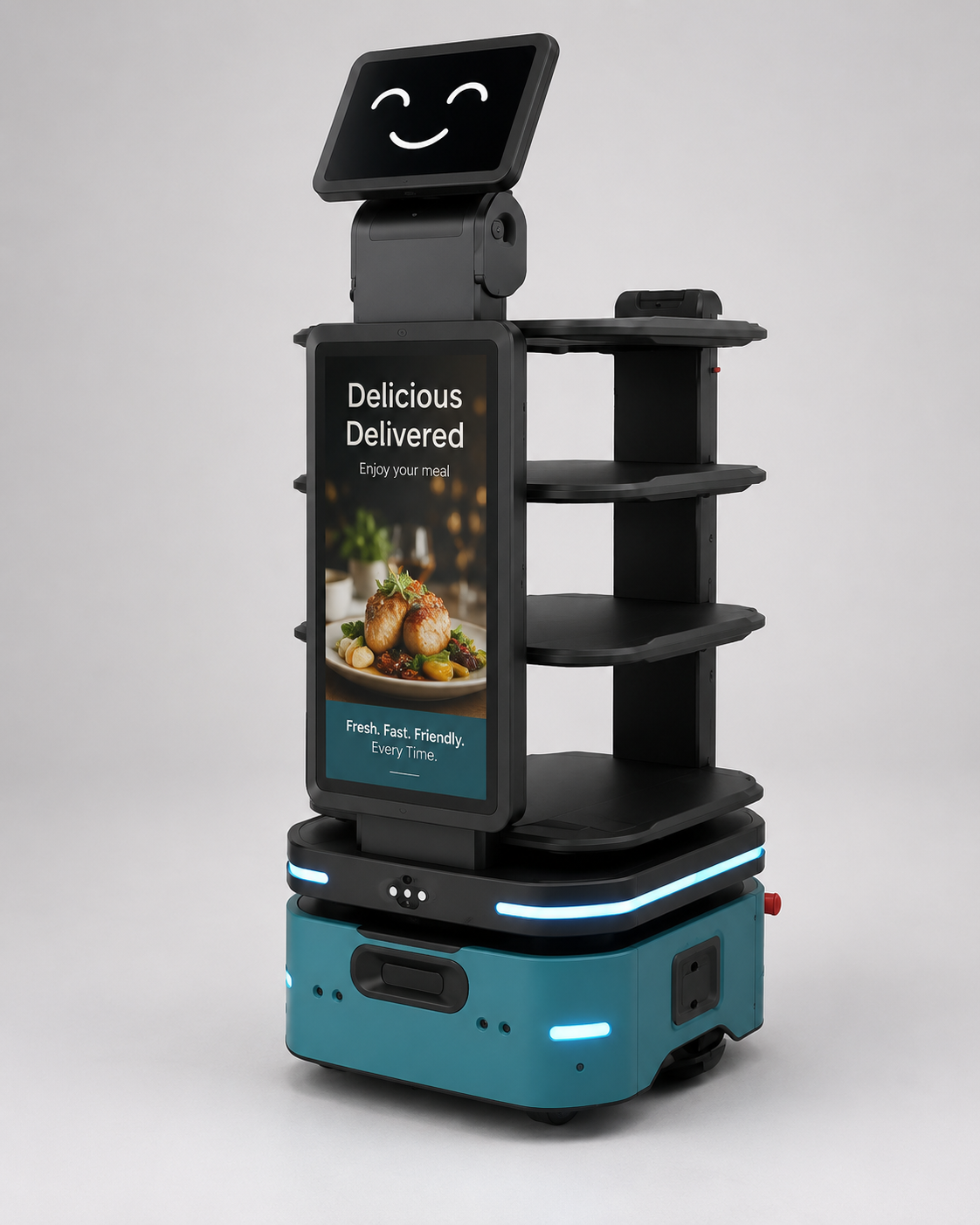
The physical design of the robot plays an important role in its practicality. With dimensions close to 965 mm in length, 545 mm in width, and roughly 1215 mm in height, the structure is compact enough to move through typical retail aisles while still offering multiple shelves for item storage.
Bi-directional wheels allow the robot to maneuver efficiently in tight spaces, while a stable frame helps prevent tipping during turns or when carrying heavier loads. These structural details are essential in stores where pathways may include sharp corners or narrow passages.
Operational Benefits for Retail Staff and Customers
Implementing autonomous delivery robots can reshape how internal store logistics are handled. Instead of relying on manual carts for every delivery task, retail teams can schedule movements and monitor progress through a centralized system.
Key operational advantages include:
-
Reduced manual handling of heavy or repetitive loads
-
More consistent delivery times between departments
-
Improved staff productivity during peak hours
-
Better coordination between inventory management and store floor operations
From a customer perspective, autonomous delivery helps maintain organized aisles because staff spend less time moving large carts through crowded areas.
Future Outlook for Autonomous Retail Delivery
As retail spaces continue to adopt digital systems for inventory and operations, autonomous mobile robots may become part of routine store workflows. Their ability to integrate with cloud platforms, navigate complex indoor environments, and carry substantial loads positions them as a practical tool for internal logistics.
Rather than replacing human roles, these robots act as support systems that handle repetitive transportation tasks. This allows retail staff to focus on decision-making, merchandising, and direct customer interaction.
Conclusion
Autonomous mobile robots designed for indoor delivery provide a structured approach to managing item movement inside retail stores. By combining sensor-based navigation, remote monitoring, and adaptable carrying capacity, these systems help streamline internal logistics while maintaining safe operation around customers and staff.
As retail environments evolve toward more automated processes, autonomous delivery robots offer a way to balance efficiency with practical store operations, supporting smoother workflows without altering the core retail experience.
Frequently Asked Questions
1. What is an autonomous mobile robot used for in retail stores?
Autonomous mobile robots are used in retail environments to transport items such as stock, customer orders, and store supplies between storage areas, shelves, and service counters. They help streamline internal logistics by reducing manual movement of goods.
2. How do autonomous delivery robots navigate safely inside retail aisles?
These robots use technologies like LIDAR, computer vision, and indoor mapping systems to detect obstacles, plan routes, and adjust movement in real time, allowing them to operate safely around customers and staff.
3. What types of products can an autonomous retail delivery robot carry?
Autonomous robots can carry packaged retail items, replenishment stock, promotional materials, and online order pickups. Their multi-shelf design allows transportation of different item categories within a single trip.
4. Can autonomous mobile robots integrate with retail management systems?
Yes, many autonomous delivery robots support cloud connectivity and API integration, enabling them to sync with inventory systems, task management platforms, and remote monitoring applications.
5. How do autonomous robots improve efficiency in retail store operations?
They reduce repetitive manual transport tasks, maintain consistent delivery schedules between departments, and allow store staff to focus more on customer service, merchandising, and operational planning.