Barcode vs RFID Tool Tracking: Which System Does Your Factory Need?
Barcode vs RFID Tool Tracking: Which System Does Your Factory Need?
Practical information for manufacturing plants, maintenance workshops and industrial tool rooms.

Compare barcode and RFID tool tracking for factories. Understand metal-tool tags, automatic inventory, costs and the right system for your tool room.
What is barcode tool tracking?
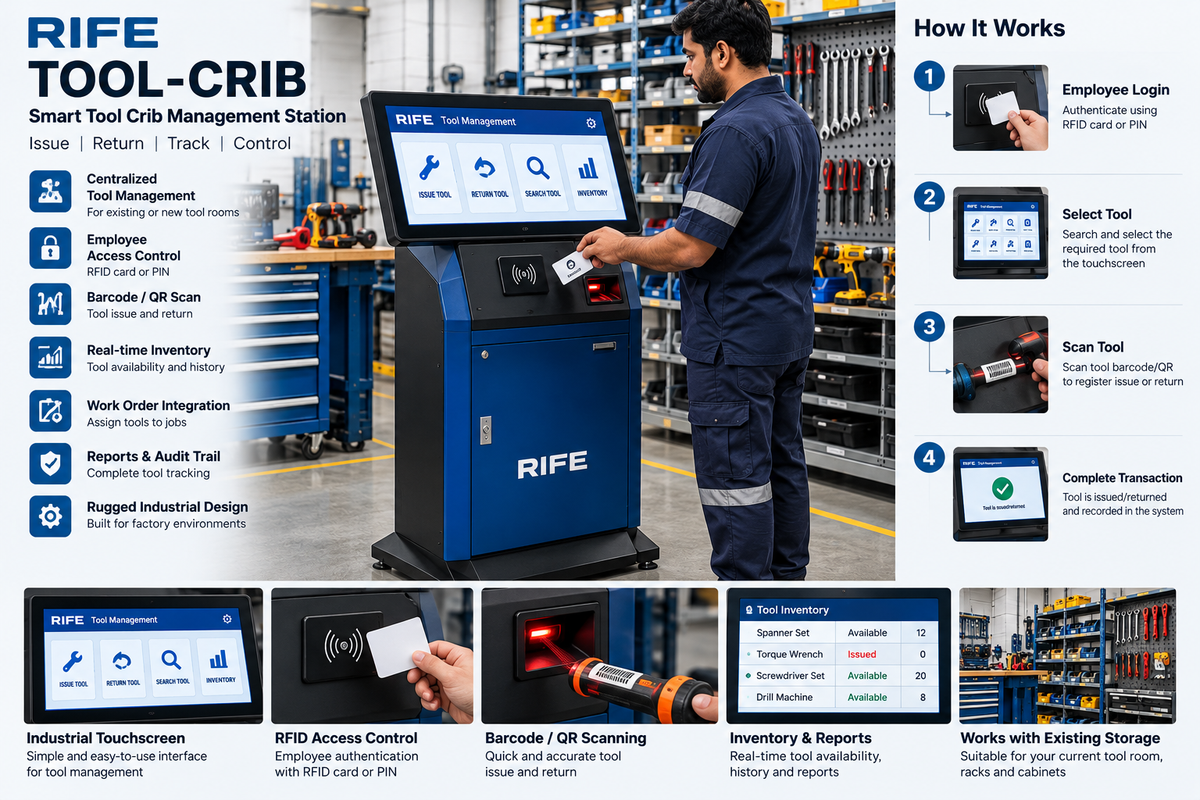
A tool or its holder receives a unique printed barcode or QR identifier. During issue or return, an employee or storekeeper scans the code and the software records the transaction. The scanner normally needs to see each code.
What is RFID tool tracking?
A compatible reader uses radio waves to identify electronic tags fitted to tools or holders. A configured reading zone may identify multiple items without scanning every printed label, but actual detection depends on the tag, antennas, location and surrounding metal.
Quick comparison table
| Comparison | Barcode / QR | RFID |
|---|---|---|
| Identification | Optical scan | Radio tag read |
| Line of sight | Normally needed | Not necessarily |
| Multiple items | Usually sequential | Possible with suitable equipment |
| Metal tools | Readable durable label | Specialised tag and RF testing |
| Retrofitting racks | Generally straightforward | Depends on RF engineering |
Barcode vs RFID: key differences
Barcode uses optical codes, typically requiring line of sight and sequential scanning; printed identifiers are usually inexpensive and straightforward to retrofit. RFID uses electronic tags and readers, potentially supporting multi-item reads and more automated inventory, with higher engineering demands. Both depend on suitable software and disciplined exception handling.
Which is suitable for metal tools?
Durable barcode labels, laser marks or labels on holders can work on metal tools if they remain readable under oil, wear and handling. RFID often requires on-metal tags and careful antenna design. Small sockets, drill bits and precision tools are especially challenging; testing against actual tools and cabinet construction is essential.
Best choice for existing tool rooms
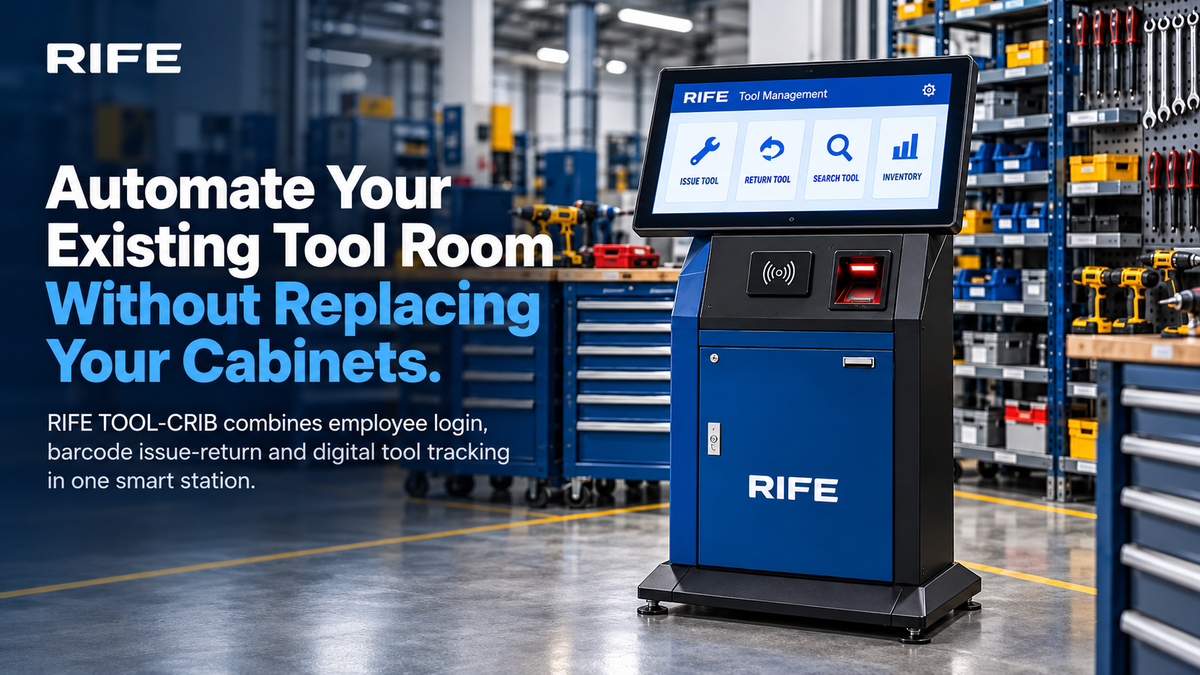
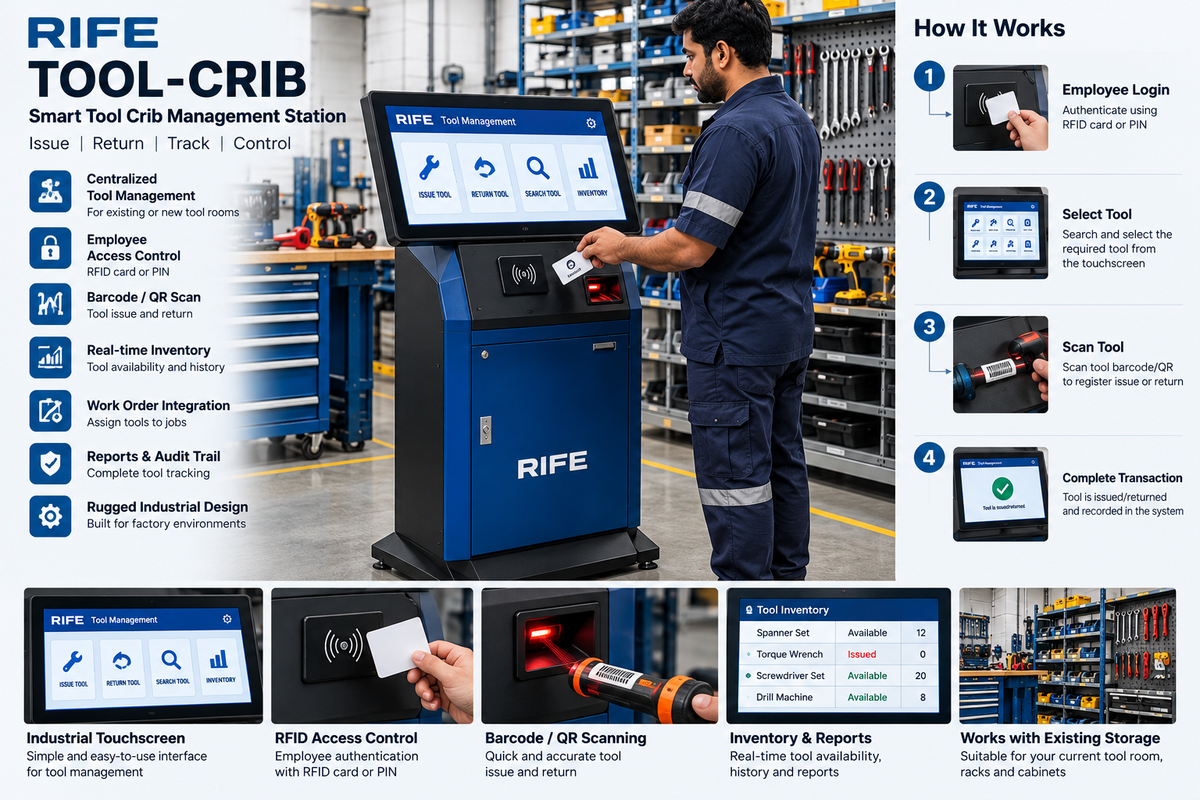
Barcode or QR tracking is often the easier first step when factories already have drawers, shelves and cabinets. Keep the storage, identify each tool, authenticate employees and scan issue-return events. RIFE TOOL-CRIB is being developed as a software-led approach for this workflow.
When does RFID make more sense?
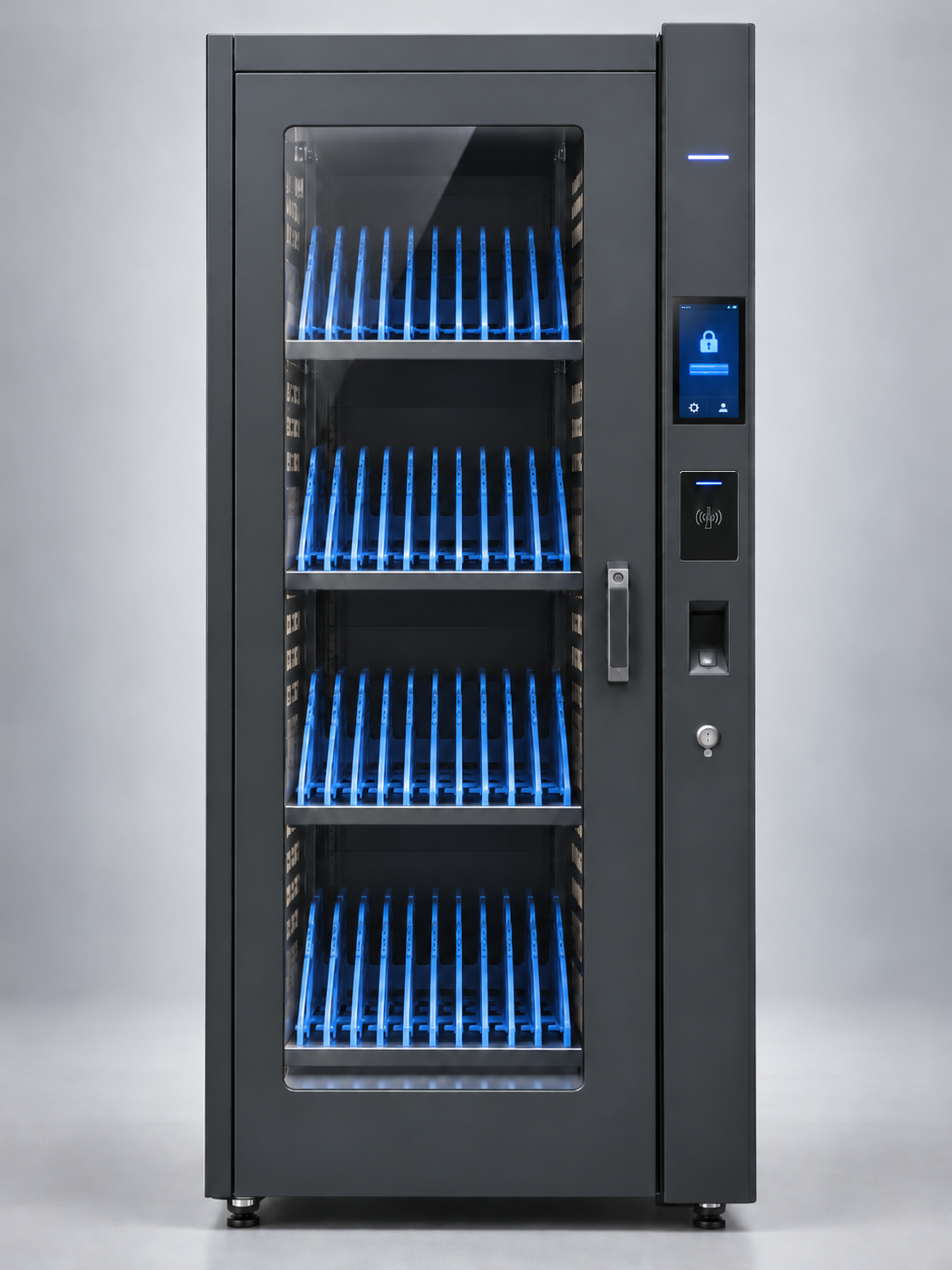
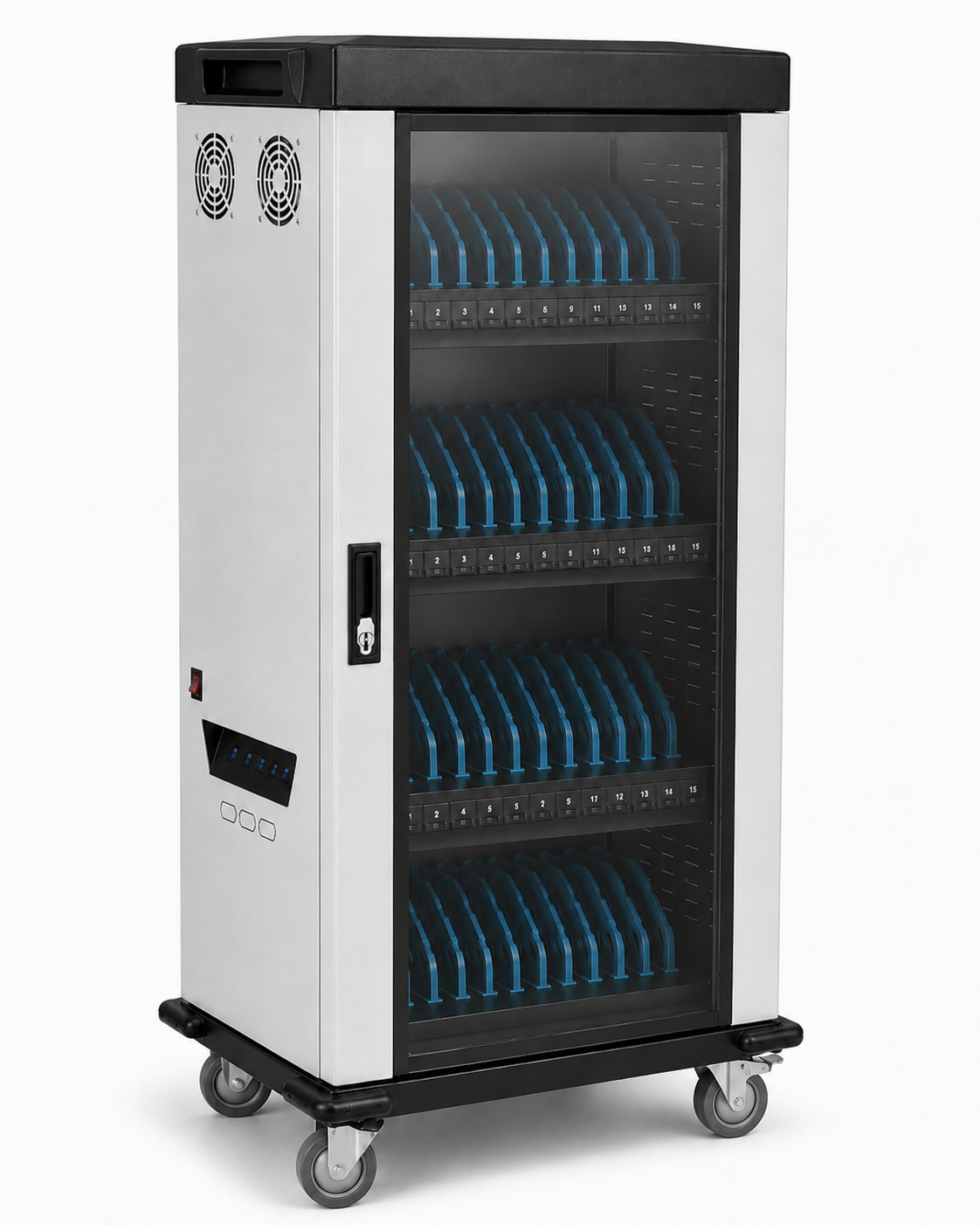
RFID may be appropriate for expensive shared equipment, large inventories needing repeated checks, configured smart cabinets and controlled industrial storage. It can work alongside electronic locks and staff credentials, but item-level accuracy must be validated for each installation.
Does RFID detect every tool automatically?
No. Reader zones, tag placement and metal cabinet reflections may cause missed or unexpected reads. Software must handle exceptions rather than automatically assuming an unread tag means a tool was removed.
What about tracking without RFID tags?
Specialized sensors or computer vision can detect tool presence in designated slots, but these solutions require different hardware and careful layout calibration. They should not be confused with barcode scanning or item-level RFID identification.
Can factories combine barcode and RFID?
Yes, subject to compatible software. Ordinary tools could use barcode labels while higher-value items use tagged RFID cabinets. Mixed approaches can help avoid unnecessary hardware investment.
How to select the right technology
Define tool quantity, daily transaction volume, how willing staff are to scan, automatic counting requirements, metal-tool dimensions, existing storage constraints, department access and reporting needs before making a selection. New RIFE TOOL-CRIB model configurations are under development; validate functions and specifications before ordering.
Frequently asked questions
Is RFID always better than barcode?
No. RFID may automate reads, while barcode is often simpler for existing tool rooms.
Can barcode work on metal tool cabinets?
Yes, when codes are placed where workers can scan them.
Does every RFID-tracked tool need a tag?
For individual tag-level identification, the tool or associated holder needs a compatible RFID tag.
Can RFID read multiple tools?
It can, with suitable readers, antennas and a tested read zone.
Related RIFE tool management options

Explore industrial tool management with RIFE
Keep existing cabinets where practical, and choose a tool-identification and issue-return system that fits your workflow. The RIFE TOOL-CRIB station is a proposed product configuration under development; final functions require validation.
Explore Tool Crib Management Request consultation