Tool Crib Management in Excel vs Software: When Should Your Factory Upgrade?
Tool Crib Management in Excel vs Software: When Should Your Factory Upgrade?
Practical information for manufacturing plants, maintenance workshops and industrial tool rooms.

Compare Excel tool inventory tracking with dedicated tool crib management software. Learn when to upgrade and how to digitize existing tool rooms.
Can you manage a tool crib in Excel?
Yes. A spreadsheet can hold tool IDs, descriptions, department, cabinet and drawer locations, tool status, employee assignments, issue date, expected return and calibration due date. For small inventories and low transaction volumes, a well-maintained workbook may be sufficient.
Where Excel becomes difficult
Manual data entry can be missed when employees take tools. Multiple editors can create conflicting records. A status column alone does not give a transaction history. Overdue alerts require formulas or automation, and multi-location records and calibration reminders become difficult to maintain consistently.
Quick comparison table
| Comparison | Excel | Software |
|---|---|---|
| Basic tool register | Supported | Supported |
| Employee-linked issue / return | Manual entry or custom workflow | Transaction-driven with configuration |
| Barcode scanning | Additional integration needed | Supported where configured |
| History and overdue reports | Must be designed and maintained | Available in suitable software |
| Physical item detection | Requires extra hardware | Requires extra hardware |
Excel versus dedicated tool crib software
Both can maintain an inventory and assigned locations. Excel needs manually designed transaction logs and may require external hardware/software integration for barcode scans. Suitable tool crib platforms can provide user authentication, role permissions, transaction-driven status updates, overdue alerts and multi-location reporting. Neither technology automatically proves that a physical tool is in the right place without a reliable scanning or sensing procedure.
When is Excel good enough?
Excel remains practical for small workshops, infrequent tool movements and early inventory-registration work. Organising tool IDs and storage locations in a spreadsheet can be a useful migration starting point.
Seven signs it is time to upgrade
Frequent missing-tool searches; multiple daily shifts; many people editing the same record; overdue returns needing repeated chasing; supervisors requiring employee- and job-linked history; difficult calibration tracking; and reporting across several tool rooms.
How barcode-based tool issue and return works
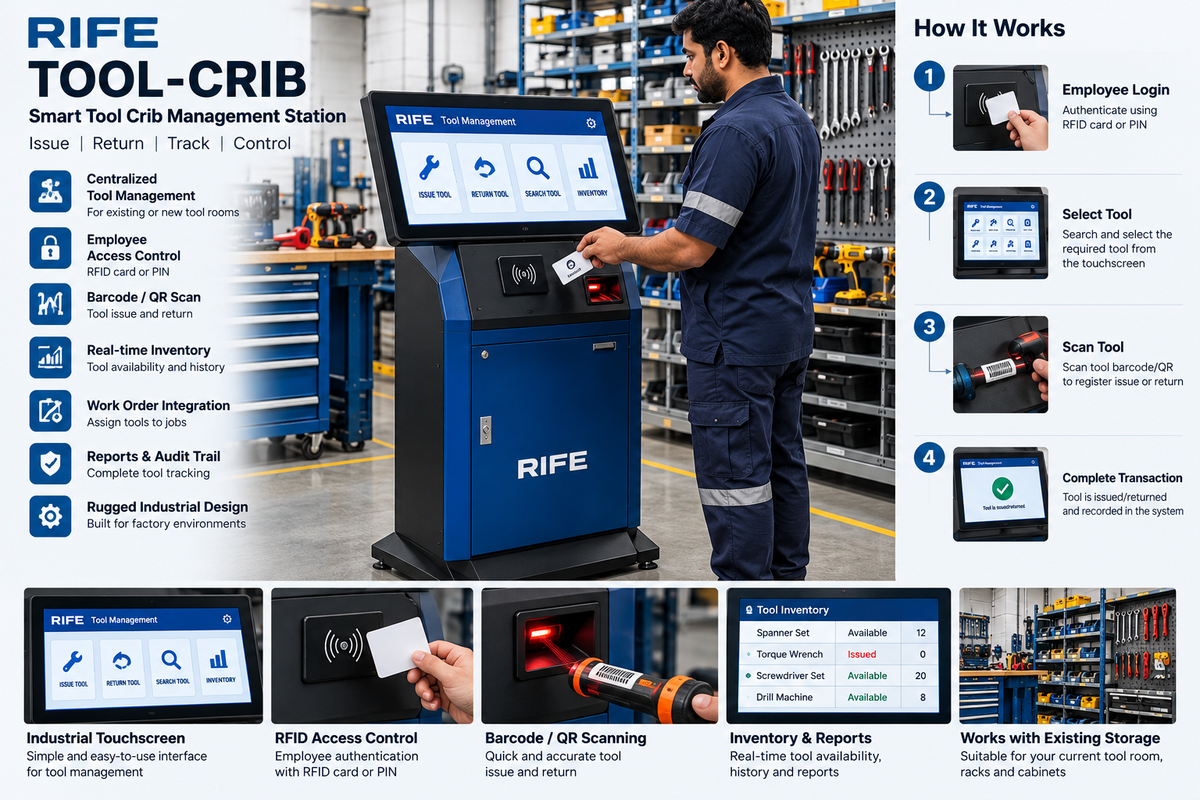
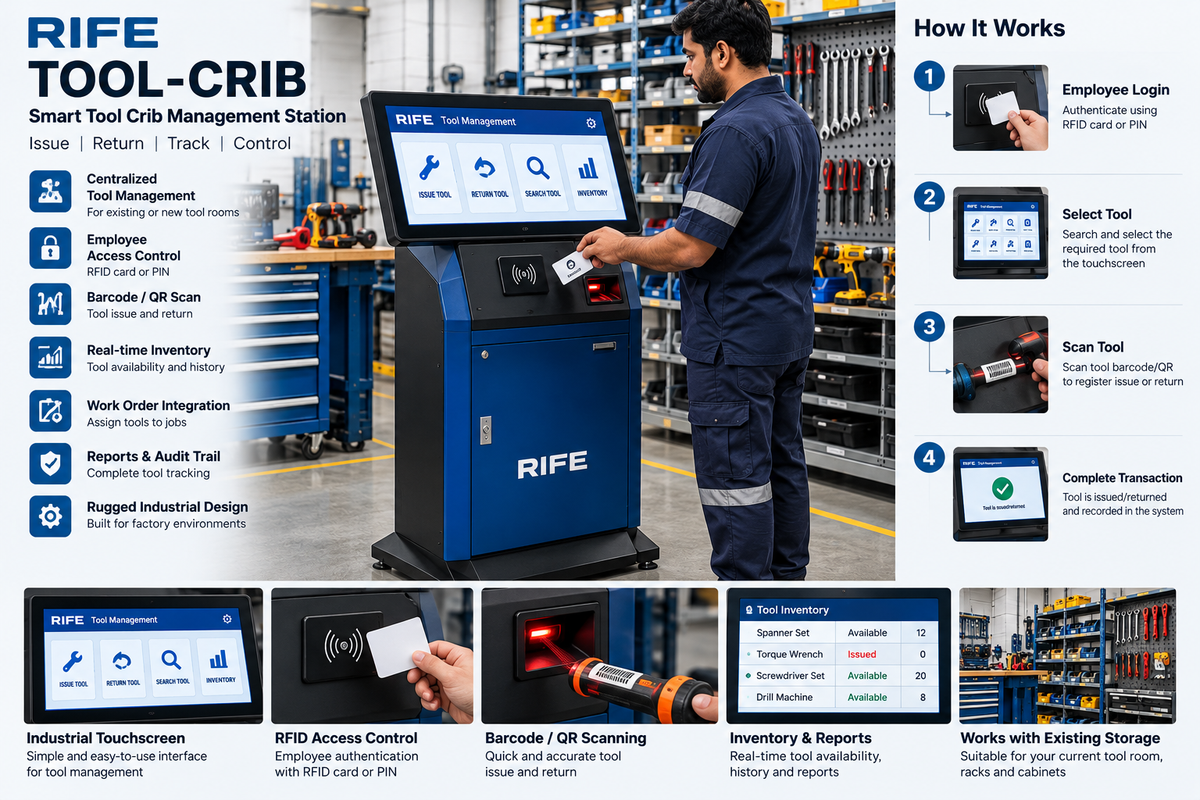
Register each tool, assign a barcode or QR label, authenticate the employee, scan the tool at issue and scan again at return. The software then records movements. Existing cabinets can usually be retained, but the workflow depends on staff following scan procedures.
Do you need to replace existing cabinets?
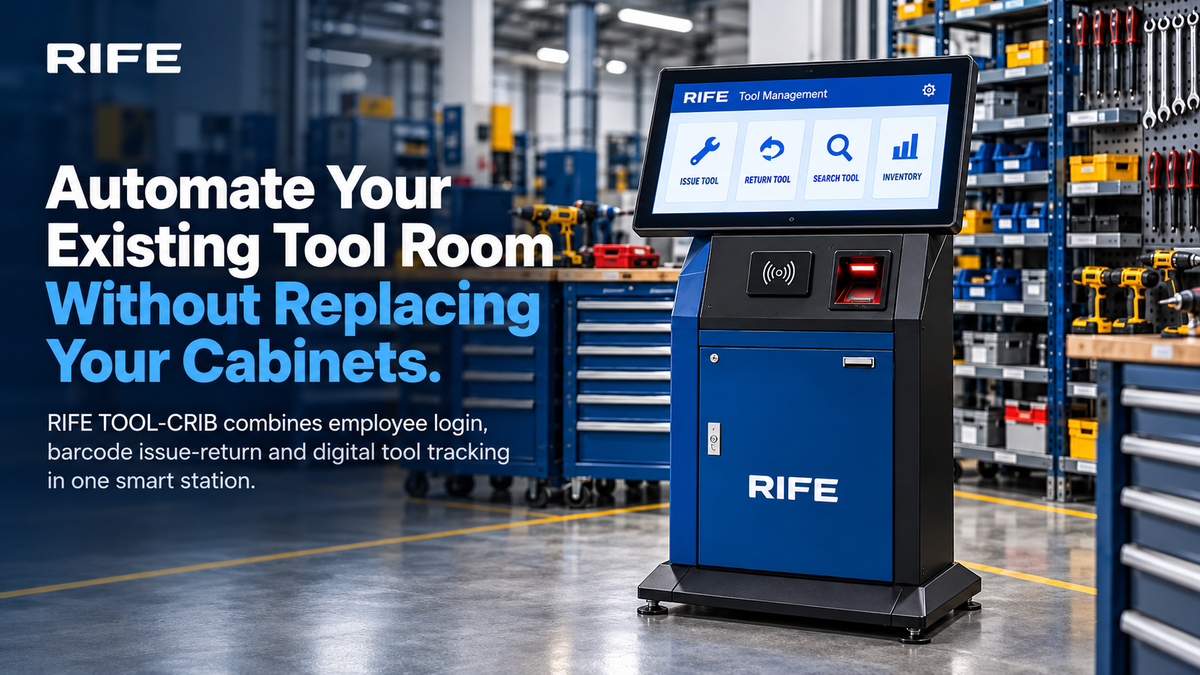
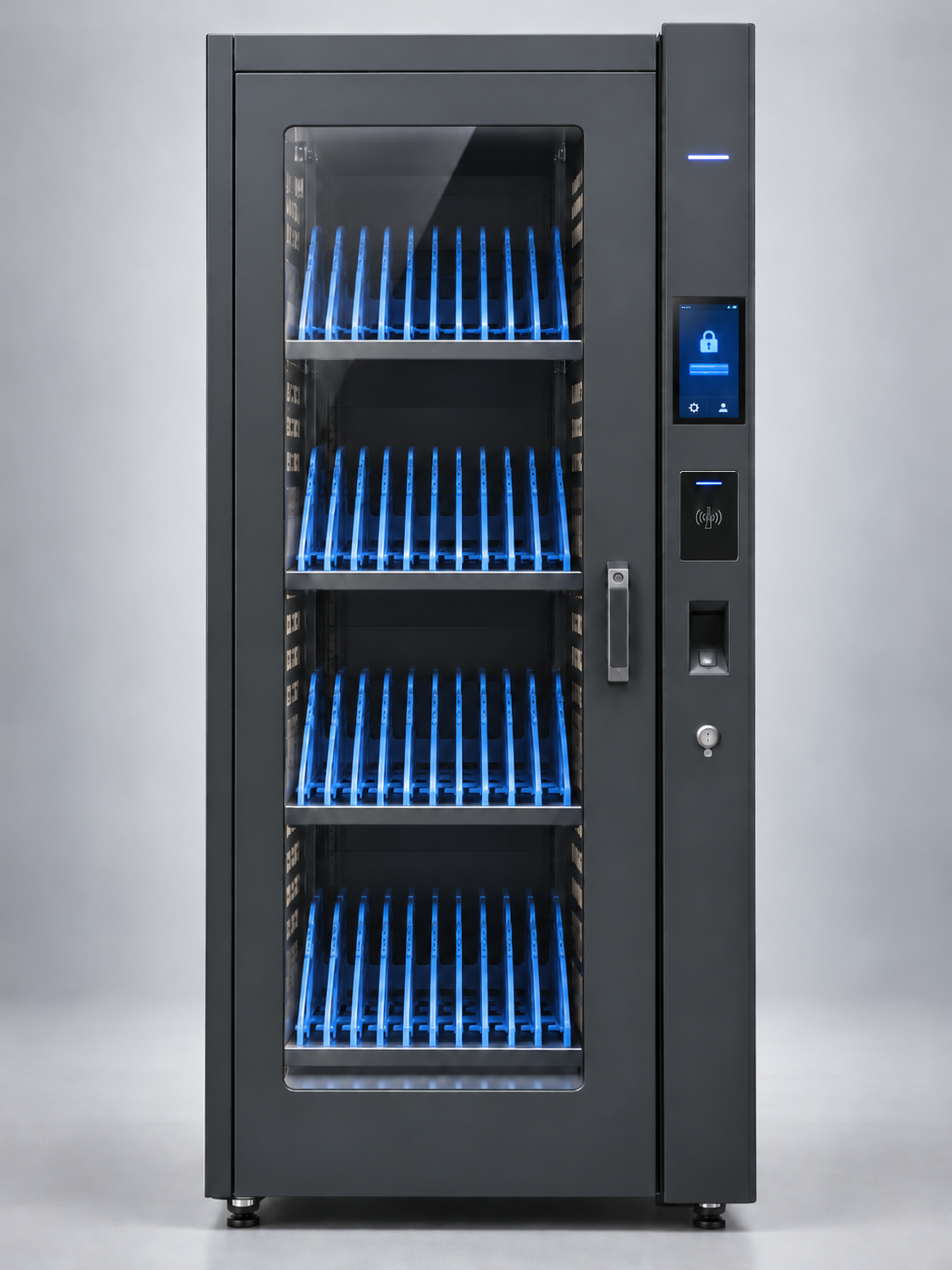
Usually not for a software-led barcode approach. Keep storage cabinets and racks, then add tool identification, staff authentication, a scanning point, a central database and operating procedures. RFID lockers may be introduced for special tool groups later.
Costs and potential return
Include terminal, scanner, staff reader, software setup, identifiers, training and support. Compare these with staff time spent on registers, stock reconciliation, search time and avoidable loss. Any financial saving should be calculated from actual factory data rather than invented percentages.
Migrating from Excel
Clean duplicate or obsolete rows, assign unique tool IDs, register actual storage locations, map columns for import, establish employee authentication, pilot the scanning process and reconcile records against physical inventory. RIFE TOOL-CRIB is a proposed configuration under development, not a proven deployed installation.
Frequently asked questions
Can Excel automatically track physical tools?
Only with added scanning or sensing components; formulas alone do not detect removals.
Is barcode cheaper than RFID?
Barcode equipment often has lower hardware complexity, but quotations depend on the deployment.
Can existing inventory be reused?
Often yes after cleaning and mapping the data.
Does software prevent theft?
Software can improve traceability but needs appropriate physical access controls to restrict removal.
Related RIFE tool management options

Explore industrial tool management with RIFE
Keep existing cabinets where practical, and choose a tool-identification and issue-return system that fits your workflow. The RIFE TOOL-CRIB station is a proposed product configuration under development; final functions require validation.
Explore Tool Crib Management Request consultation