Smart Inventory Monitoring on Storage Racks | Weight Sensors & Auto Replenishment
RIFE SMART INVENTORY • INDUSTRIAL BUYING GUIDE
Smart Inventory Monitoring on Storage Racks: Automatic Stock Replenishment
Monitor inventory directly on shelves and bins, detect low stock earlier and build a more reliable replenishment process for factories, hospitals and maintenance stores.
Explore Weight-Sensor Inventory Systems
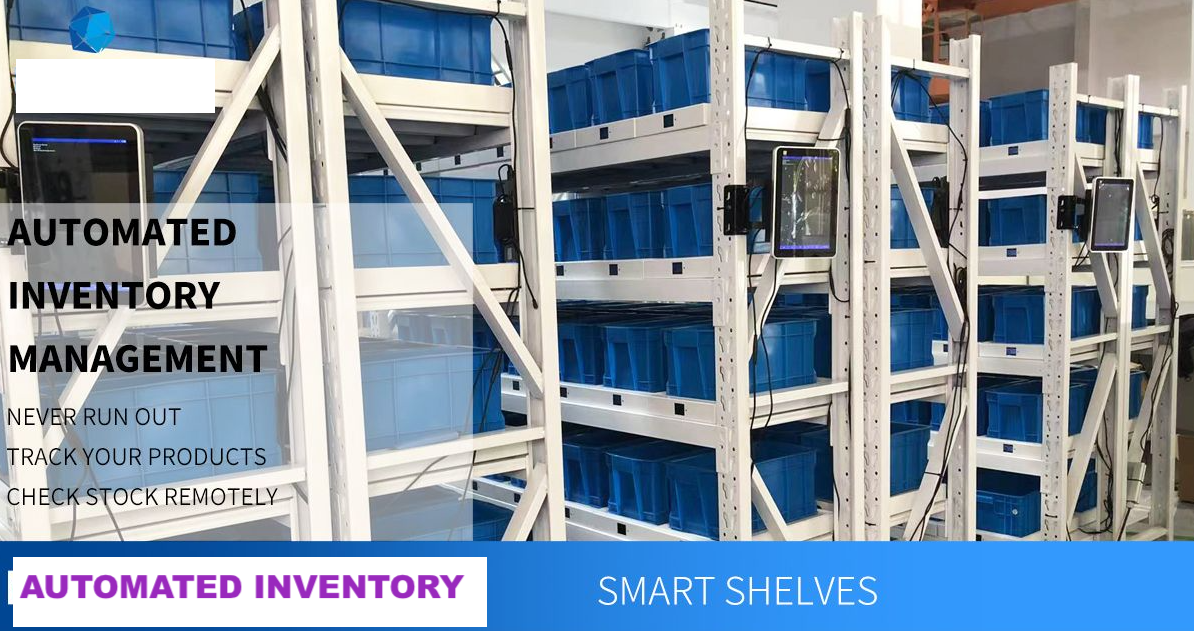
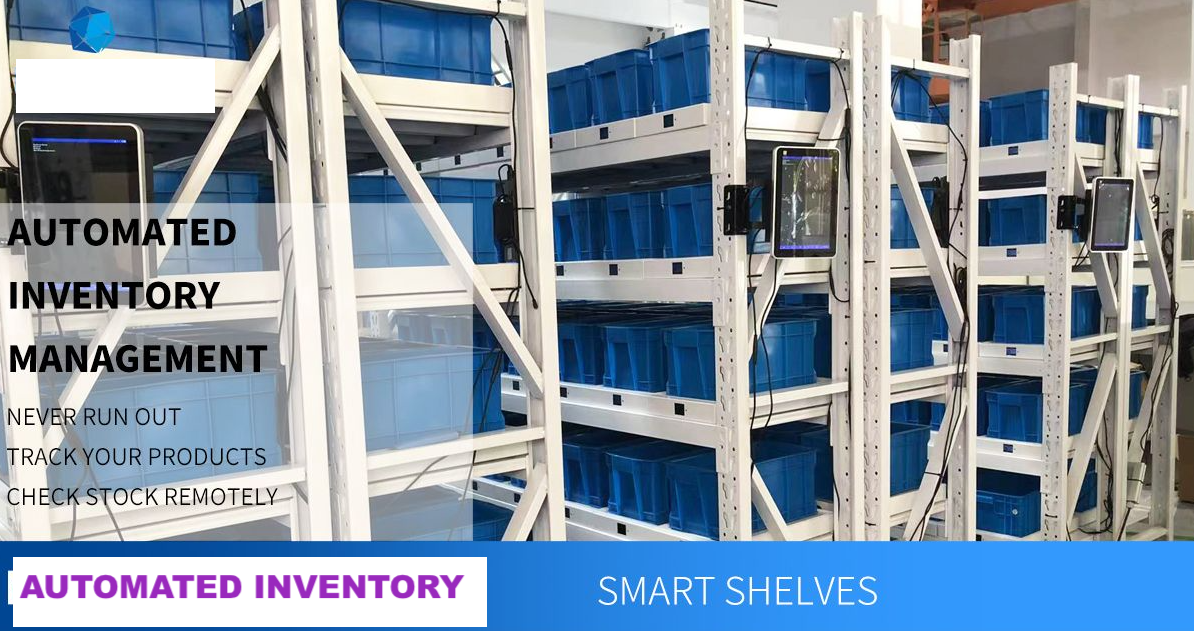
Manual shelf checks are time-consuming and can miss a shortage until the next count. Smart inventory monitoring converts storage racks into measurable inventory locations. Depending on the installation, weight sensors, proximity or presence sensors, and other connected devices can report stock changes to a management application. When the available quantity crosses a configured minimum, the system can raise an alert or initiate a replenishment workflow.
Why manual rack replenishment causes supply disruption
Many warehouses, hospital supply rooms and maintenance stores still rely on staff checking each bin and shelf, recording remaining quantities and requesting replenishment. The system may appear simple, but checks can be delayed, counted quantities may differ from reality and fast-moving consumables can run out between inspection rounds.
Missed low-stock levels
Items can deplete before the next stock count, delaying production or care processes.
Manual counting effort
Staff spend time inspecting bins rather than on higher-value tasks.
Slow replenishment signals
A purchase or warehouse transfer request may be raised only after a shortage is noticed.
How smart inventory monitoring on racks works
The RIFE approach is to combine suitable shelving and connected sensors with inventory software. A typical weight-based rack workflow uses a calibrated sensor at each monitored bin or shelf position; the software translates weight change into an estimated quantity using a configured unit weight and tare value. A replenishment threshold then drives an alert or, where enabled, a request to the responsible storekeeper or supplier system.
1. Place labelled items in the assigned bin or shelf position. 2. Sensor readings update the stock estimate. 3. Software compares the estimate with the minimum-stock threshold. 4. A low-stock notification or replenishment request is generated. 5. An authorised employee restocks the location and verifies the updated reading.
Technologies used in smart storage racks
| Technology | What it detects | Best suited to | Important limitation |
|---|---|---|---|
| Weight sensors / load cells | Changes in load at a shelf or bin | Uniform consumables, fasteners, packaged supplies | Requires unit-weight calibration; mixed items can reduce accuracy |
| Proximity or presence sensors | Presence at a defined location | Bin occupancy and designated item positions | Usually cannot identify or count mixed items independently |
| RFID | Compatible tagged items in a configured read zone | Tagged reusable assets, cabinets and selected inventory | Tag placement, metal and RF conditions affect performance |
| IoT gateway and software | Connected readings, thresholds, history and alerts | Monitoring multiple racks and locations | Integrations and automation depend on the approved configuration |
How a smart weighing shelf turns weight into inventory quantity
A weight-sensor inventory system can be understood as four connected layers. The exact hardware is selected around the bin load, unit weight, rack design and required network architecture.
| System part | What it does | Why it matters |
|---|---|---|
| 1. Load cell | Measures the weight carried by the bin, tray or monitored shelf position. | The sensor must be sized for the full bin weight while still resolving a useful change in stock. |
| 2. Rigid mounting | Transfers the bin load consistently to the sensor and helps the bin re-seat in a repeatable position. | Mechanical stability is as important as the sensor specification for repeatable readings. |
| 3. Weight transmitter | Reads one or more load-cell channels and passes measurements to the controller or network. | Channel count and connection method are selected project by project; RIFE systems may use wired or networked architectures such as RS485, LAN or Wi-Fi. |
| 4. Inventory software | Stores the configured unit weight, converts weight changes into quantity and shows stock, alerts and reports. | This is the layer that turns a sensor reading into an operational replenishment workflow. |
From weight to count: a simple example
If a configured item weighs 10 g per unit and the net item weight in the bin is 2,000 g, the software can calculate an estimated quantity of 200 units. If the reading later falls to 1,850 g, the 150 g change corresponds to 15 units. The exact resolution and confidence depend on the selected load cell, mechanical mounting, calibration, item consistency and packaging.
What makes the system reliable: correct sensor sizing, a stable zero point, repeatable mechanical mounting and verified unit weights. If a supplier changes the item or packaging, the unit-weight setup should be reviewed.
See RIFE Weight-Sensor Smart Inventory Cabinets & Shelves · See the manufacturing line-side application
Can smart sensors be fitted to existing storage racks?
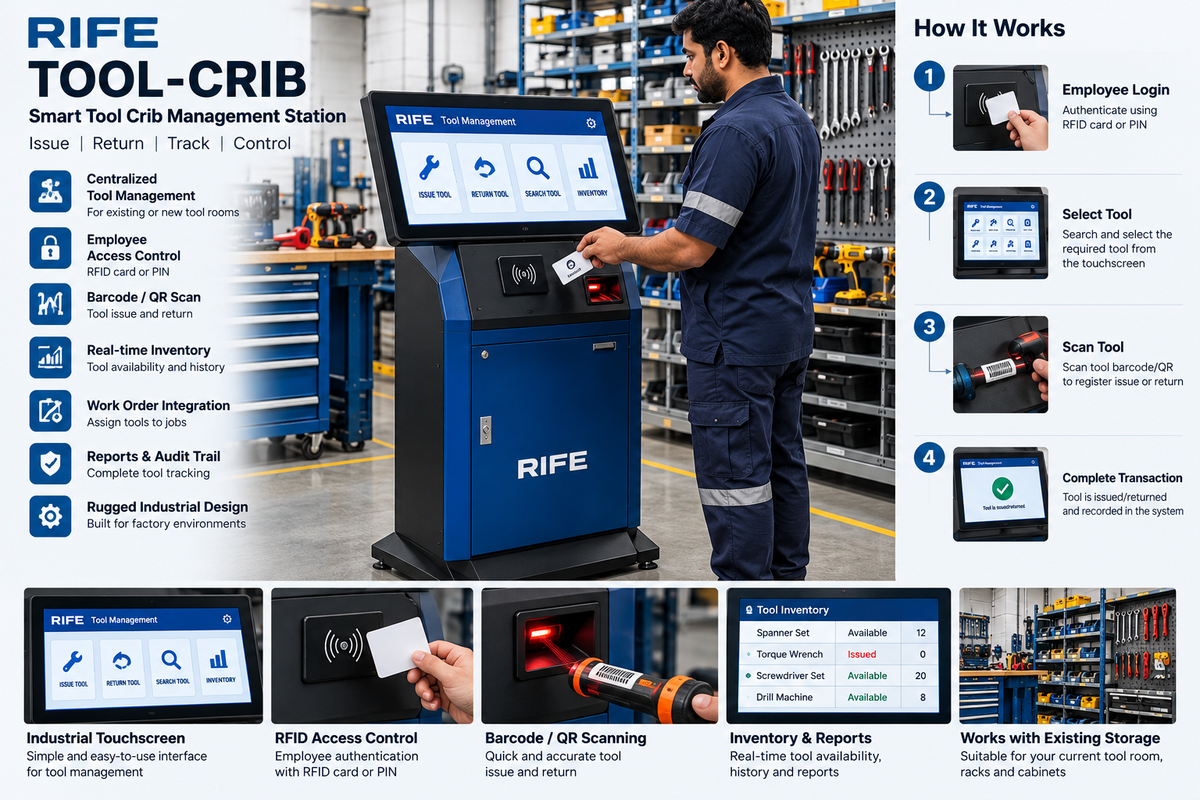
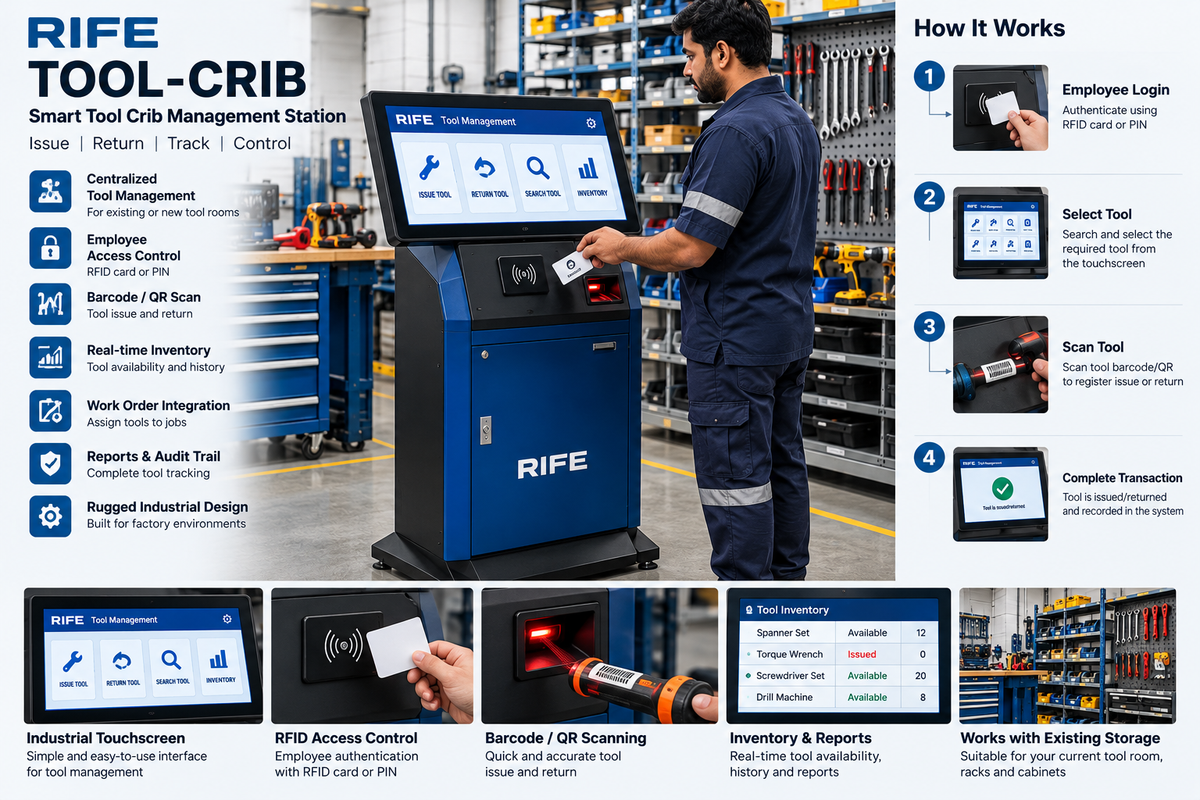
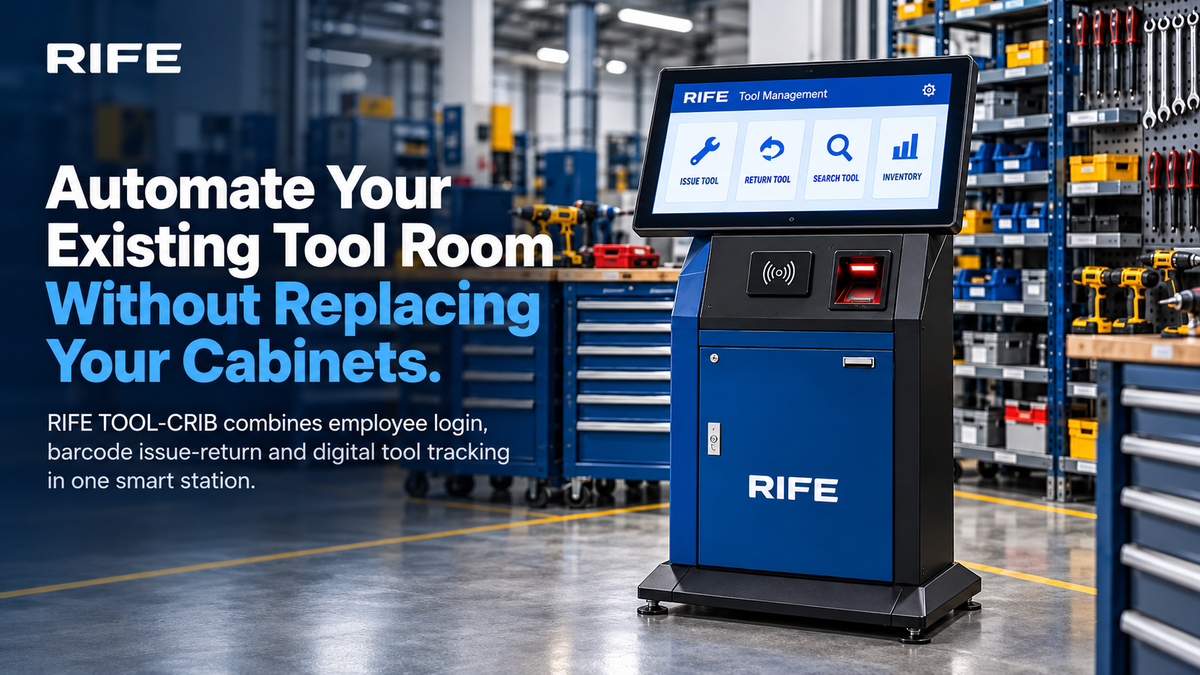
Potentially, yes. A retrofit can preserve existing rack frames while adding sensor-supported bins, shelf modules, cabling, a controller and the necessary power or network infrastructure. Alternatively, a purpose-built smart rack or enclosed smart cabinet may be more appropriate where the rack geometry, hygiene, security or load requirements demand it.
Before selecting a system, confirm bin dimensions, maximum and minimum loads, weight-per-item variation, number of storage positions, environmental conditions, network connectivity and the need for item-level traceability. RIFE can assess an application-specific configuration; a universal drop-in retrofit should not be assumed.

Automatic stock replenishment: alert, request or purchase order?
These are different levels of automation. At the simplest level, the rack raises a low-stock alert. At the next level, software can prepare an internal transfer or replenishment task for an authorised user. A fully integrated workflow could pass validated events through an API to a warehouse, ERP or procurement system where supported.
Important: Threshold monitoring does not automatically mean supplier ordering is live. ERP integrations, approval rules and purchase-order creation must be specified, implemented and tested for each deployment.
Typical applications
Hospitals and biomedical stores
Track replenishment levels for compatible packaged consumables, clinical supplies and maintenance spares, subject to storage and handling requirements.
Unmanned or low-staff storage rooms
Monitor inventory locations between physical checks and escalate exceptions to the responsible team.
MRO and manufacturing
Manage fasteners, spare parts, maintenance consumables and other uniform items used by multiple shifts.
Warehouses and distribution
Use stock thresholds to support internal replenishment of picking bins and production-side stores.
Benefits to evaluate — and how to measure them
Smart rack monitoring can reduce repetitive manual checks, improve the visibility of stock levels and help replenishment teams react earlier. Actual business value depends on the inventory, deployment design and work processes. Useful measures include stockout frequency, time spent on cycle counts, replenishment lead time, sensor-reading exceptions and inventory accuracy against periodic physical counts.
Smart shelves vs smart cabinets vs RFID inventory
| Solution | Typical use | Key decision |
|---|---|---|
| Open weight-sensor racks | Frequently accessed bins and consumables | Can individual bins support accurate sensing and calibration? |
| Enclosed weight-sensor cabinets | Controlled storage where shelves must be housed | Do you need an enclosure or access control? |
| RFID inventory cabinets | Compatible individually tagged assets or stock | Will tagging and the RF read zone work reliably? |
RIFE smart rack configuration checklist
- Number of racks, shelves and monitored bins
- Item dimensions, typical weight and whether each bin contains one SKU
- Minimum and maximum quantity per storage position
- Power, controller, cabling and network arrangement
- Dashboard, reporting, user roles and low-stock alert requirements
- Existing ERP, warehouse or procurement system and any required APIs
- Maintenance, sensor calibration and periodic physical reconciliation

Frequently asked questions
Can weight sensors count items on a rack?
They can estimate quantities from calibrated weight readings when items are sufficiently uniform. Different unit weights, packaging and mixed SKUs may require another method or additional checks.
Is inventory information updated in real time?
Connected sensors can provide near-real-time status, depending on polling intervals, network availability and system design. It is not a guarantee of uninterrupted instantaneous counts.
Can this work with existing racks?
Retrofitting may be possible after checking structural capacity, shelf configuration, sensor placement and cable routing.
Will it automatically order stock from suppliers?
It can be designed to trigger low-stock alerts or replenishment requests. Automated supplier ordering requires a separate approved integration and business rules.
Is this only for factories?
No. Hospitals, biomedical companies, MRO stores, warehouses and other supply rooms may benefit where inventory is compatible with sensor monitoring.
Plan smart inventory monitoring for your storage racks
Share your rack dimensions, number of bins, typical stored items and replenishment workflow. RIFE can assess whether weight-sensor shelves, monitored bins or a smart cabinet are more suitable.
Explore Weight-Sensor Inventory SystemsRequest a Consultation