Best Classroom Charging Stations for Schools in India
Best Classroom Charging Stations for Schools in India
Digital learning has made laptops, tablets, iPads and Chromebooks part of everyday teaching. However, introducing devices is only the first step. Schools must also decide where devices will be stored, how they will be charged, who will distribute them, and how they will move between classrooms.
Why Schools Need Organised Charging
Without a central charging solution, schools face students arriving with discharged devices, teachers searching for chargers, adaptors spread across classrooms, time lost distributing equipment, and devices not ready for the first lesson. A properly designed station keeps devices together and establishes a repeatable daily process.
1. Mobile Charging Carts — Best for Shared Fleets
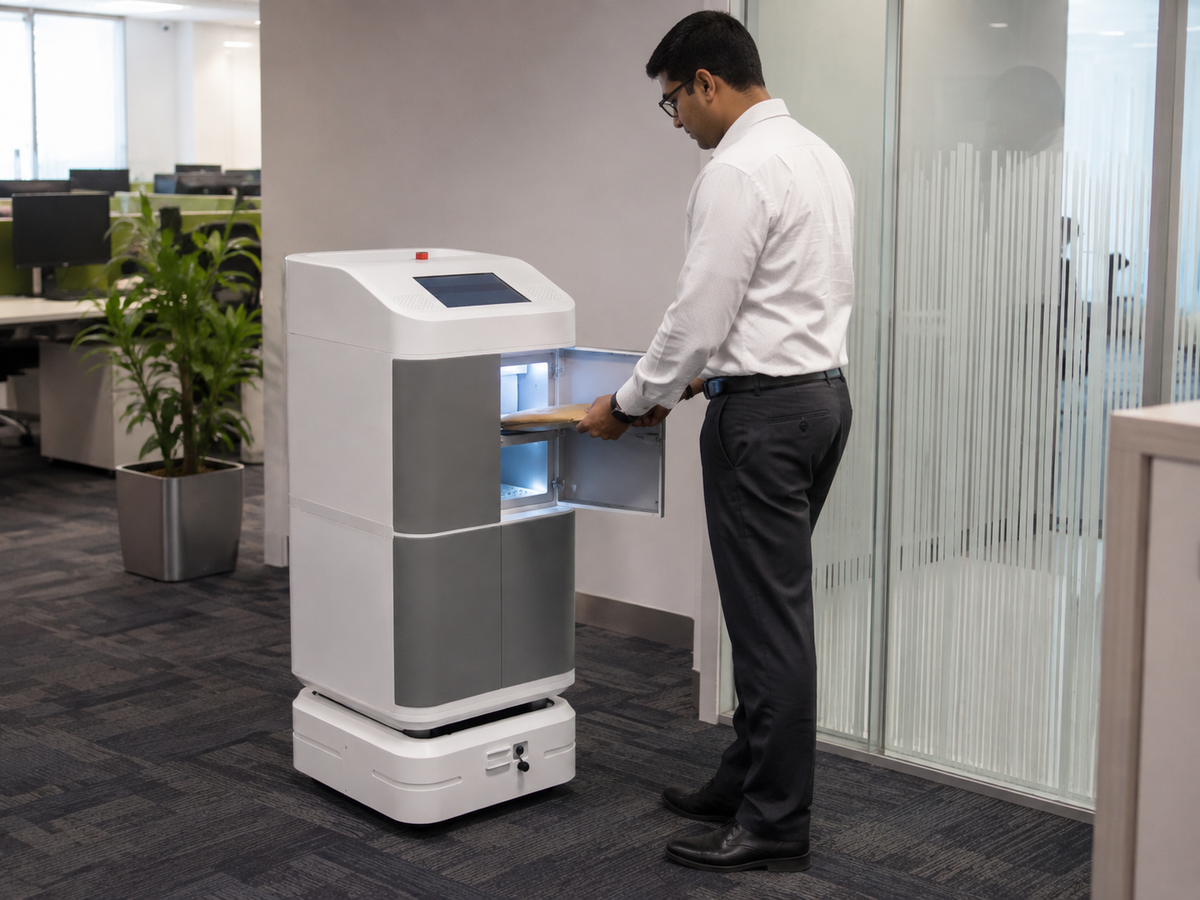
A mobile charging cart stores a complete class set and can be moved between classrooms according to the timetable. One cart can serve several classes, devices remain together, and the cart can be locked overnight. Suitable for shared Chromebook programmes, tablet-based classrooms, computer labs, STEM labs, libraries, and coaching institutes.
2. Fixed Charging Cabinets — Best for Dedicated Classrooms
A fixed charging cabinet is suitable when devices remain in one classroom or IT room. Advantages include stable installation, reduced movement-related wear, higher potential capacity, and easier connection to a dedicated power point.
3. Smart Lockers — Best for Individual Access & Accountability
Smart charging lockers are used when devices are assigned to individual users — students borrowing a replacement Chromebook, teachers collecting tablets, or devices being returned outside IT-office hours. Users authenticate through PIN, RFID card, or QR code. The system records user, compartment, collection time, return time, and device status.
4. Compact Charging Stations — Best for Small Groups
A compact charging station manages 5–16 tablets or smaller devices. Useful in kindergarten classrooms, staff rooms, library counters, special-education rooms, and small training groups.
Which USB-C Wattage Does Your School Need?
All modern iPads, Chromebooks, and MacBooks charge via USB-C. Choosing the right wattage is critical for fast, safe charging across your fleet.
20W
USB-C Standard Fast Charge
Use case: iPads, Android tablets, standard classroom overnight charging.
Suitable for: iPad (10th Gen), iPad Air, iPad Mini, standard Android tablets, most Chromebooks.
45W
USB-C High-Power Fast Charge
Use case: iPad Pro, Samsung Galaxy Tab, premium tablets, faster top-up between classes.
Suitable for: iPad Pro 11" & 13" (M2/M4), Samsung Tab S9/S10, premium Chromebooks.
65W
USB-C Ultra Fast Charge
Use case: MacBooks, laptops, high-demand devices.
Suitable for: MacBook Air (M2/M3), MacBook Pro, Windows laptops, Surface Pro.
Not sure which wattage to choose? Contact our team — share your device model and we’ll confirm the right configuration for your school fleet.

How to Choose: Quick Comparison
| Product | Model | Capacity | Best For | Mobile? | Action |
|---|---|---|---|---|---|
 |
RLAB30E Smart Mobile Cart |
30 Devices | Mixed fleets, shared classrooms | ✓ Yes | View |
 |
RP36-B-18W Glass Door, USB-C 18W |
36 Devices | iPads, Chromebooks, tablets | ✓ Yes | View |
|
RP36-B-45W Glass Door, USB-C 45W |
36 Devices | iPad Pro, premium Chromebooks | ✓ Yes | View |
 |
R-LAB20 Economy with Timer |
20 Devices | Budget schools, small classrooms | ✓ Yes | View |
 |
R-LAB40T Economy 40-Device |
40 Devices | Large Chromebook & laptop fleets | ✓ Yes | View |
School Procurement Checklist
Before requesting a quotation, provide: device brand and model, device dimensions, protective-case dimensions, number of devices, charger wattage (AC or USB-C), number of classrooms, mobility requirement, security requirement, available electrical supply, and expected expansion.
Trusted. Proven. Pan-India.
Trusted by 500+ Leading Schools Across India
RIFE classroom charging stations are the preferred choice of IT managers and school administrators across India.
A Selection of Schools That Trust RIFE Charging Solutions
American International School
Army Public School
Basava International School
Bhavan Vidyalaya School
Bluebells School International
Bombay International School
Calcutta International School
DAV Public School
Dhirubhai Ambani International School
G.D. Goenka Public School
Good Shepherd International School Ooty
Oakridge International School
Oberoi International School
Pathways School Noida
Sanskriti School
Stonehill International School
The Heritage School
The Velammal International School
Woodstock School
Wynberg Allen School
...and 470+ more schools across India
Ready to find the right classroom charging station for your school?
Read Case Studies Talk to Our Team