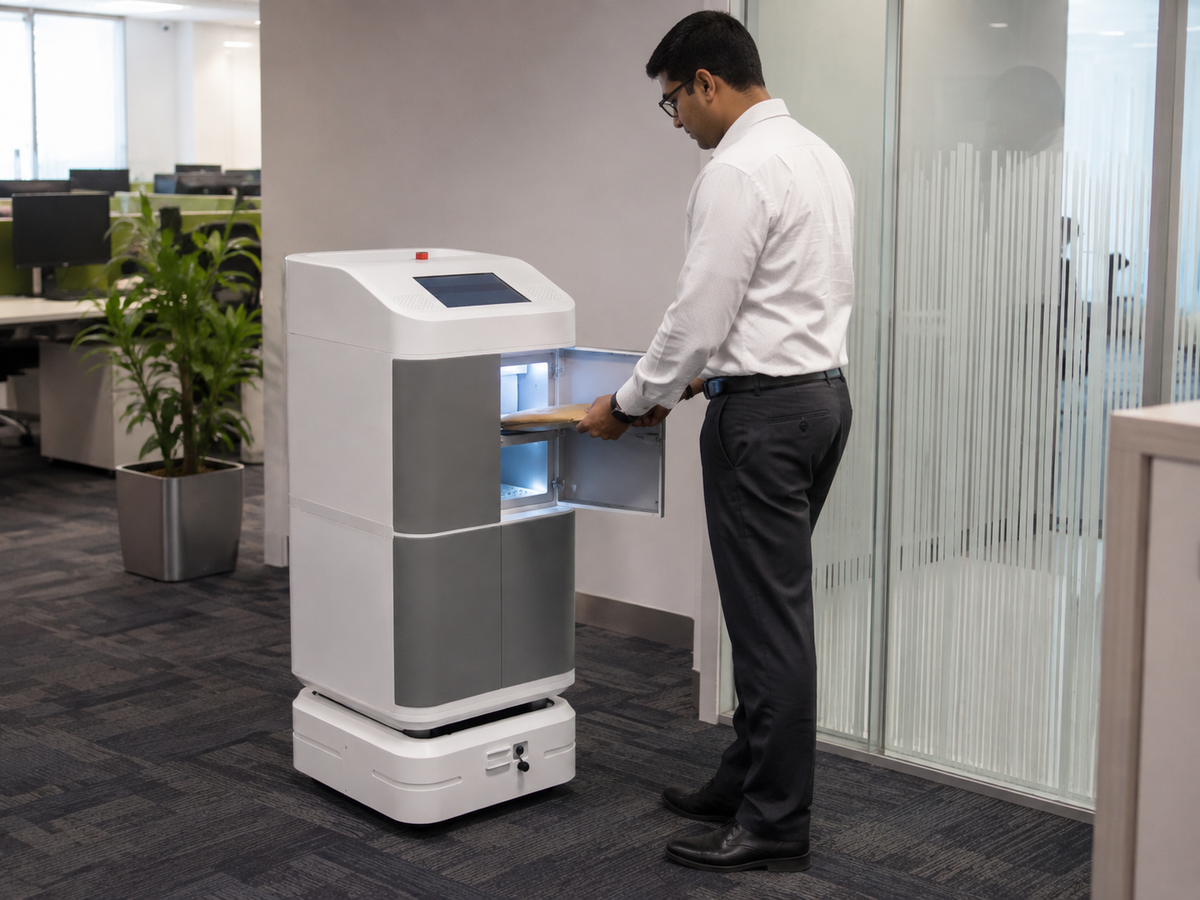
Smart Device Lockers for Retail and Warehouse Operations | RIFE
Smart Device Lockers for Retail and Warehouse Operations
Retail stores, fulfilment centres and warehouses depend on shared digital equipment.
Employees may use:
- Barcode scanners
- Handheld terminals
- PDAs
- Tablets
- Radios
- Mobile printers
- Headsets
- Point-of-sale devices
- Company mobile phones
These devices are essential for receiving, picking, inventory counting, communication and customer service.
When equipment is distributed manually, delays at the beginning of a shift can affect the entire operation.
The shift-start equipment problem
A typical manual process may involve:
- Employees reporting to a supervisor.
- The supervisor locating available devices.
- Devices being distributed one by one.
- Names or signatures being written in a register.
- Missing or uncharged equipment being identified.
- Replacement equipment being located.
At the end of the shift, the process is repeated in reverse.
Problems arise when:
- Employees are waiting
- The supervisor is unavailable
- Devices are missing
- Batteries are discharged
- Serial numbers are not recorded
- Equipment changes hands without an update
- Damage is discovered after the responsible user has left
Industry examples show that retail and logistics organisations use smart lockers to automate access to shared handheld equipment and provide real-time visibility over who has each device.
Self-service equipment collection
A smart device locker allows employees to authenticate using an approved credential.
The system can then:
- Verify access permission
- Assign a device
- Open the appropriate compartment
- Record the employee and device
- Set an expected return time
- Update the equipment status
This can remove the requirement for a supervisor to distribute every device manually.
Ensuring devices are charged
Handheld devices must be ready at the beginning of each shift.
Locker compartments can include charging connections for:
- Barcode scanners
- Tablets
- Radios
- Mobile phones
- Printers
- Headsets
A returned device can begin charging automatically once it is connected.
The dashboard can distinguish between equipment that is available and equipment that has been returned but is not ready for issue.
Tracking the exact device
Retail and warehouse operations may use dozens or hundreds of identical-looking scanners.
It is therefore useful to identify equipment by:
- Serial number
- Asset number
- Barcode
- QR code
- RFID tag
Instead of recording that an employee took “a scanner,” the system can record the exact scanner issued.
This becomes important where individual devices have different maintenance, damage or battery histories.
Shift-based return rules
Return rules can be configured according to the operation.
For example:
- Scanner due after an eight-hour shift
- Radio due before the employee clocks out
- Tablet due at the end of a stock audit
- Printer due after a temporary warehouse project
- Supervisor device issued for a longer period
When equipment is not returned, the system can generate reminders and escalations.
Time-stamped locker transactions can help maintain clearer handoffs where devices rotate between several shifts each day.
Fault reporting
Employees should be able to report a problem during return.
Examples include:
- Scanner not reading barcodes
- Cracked screen
- Weak battery
- Missing charging cable
- Radio audio fault
- Printer paper-feed problem
- Software login issue
The equipment can then be marked as faulty and removed from normal circulation.
A support employee can be notified, and the device can be routed into a maintenance compartment where configured.
Supporting multiple locations
Organisations operating several stores or warehouses may want central visibility across locations.
A management dashboard can provide:
- Equipment available by site
- Equipment currently issued
- Overdue devices
- Faulty devices
- User transactions
- Equipment utilisation
- Loss and replacement history
This allows head-office or regional teams to identify patterns that may not be visible at one location.
Equipment-management benefits
A properly configured locker system can help:
- Reduce shift-start queues
- Reduce manual administration
- Improve equipment accountability
- Increase charging readiness
- Create serialised device records
- Identify overdue equipment
- Report faults sooner
- Improve equipment utilisation
- Reduce unnecessary replacement purchases
Selecting a retail or warehouse device locker
Consider:
- Number of users per shift
- Number of devices
- Device dimensions
- Charging connection
- Number of locations
- Authentication method
- Equipment identification method
- Expected return period
- Required software reports
- Integration with employee systems
Frequently Asked Questions
Can the locker allocate the next available device?
Yes, where the selected software configuration supports dynamic equipment allocation.
Can employees use existing RFID cards?
Existing cards may be usable, subject to technology compatibility and integration requirements.
Can equipment faults be recorded?
Yes. Fault-reporting questions can be included during the return process.
Conclusion
Smart device lockers can turn equipment distribution from a supervisor-dependent activity into a structured self-service workflow.
RIFE can configure equipment-management lockers for scanners, tablets, radios, printers and other devices used in retail and warehouse operations.