Smart University Campus Automation: Robots, AI Kiosks, Smart Lockers & Device Management

How universities can combine delivery robots, AI kiosks, smart lockers and charging systems to reduce manual work and improve the campus experience.

Universities are under pressure to improve service without endlessly adding front-desk staff, runners and repetitive manual coordination. Students expect quick answers, easier navigation, safer storage and always-ready devices. Faculty and operations teams want fewer routine tasks and better control over assets.
That is why the most practical campus-automation strategy is not a single gadget. It is a connected operating layer that combines AI kiosks for information, smart lockers for secure handover, charging systems for shared devices and mobile robots for repetitive transport. The value comes from how these elements work together across libraries, admissions, labs, hostels, admin blocks and student-service zones.
Key takeaways
- Reduce repetitive reception and support workload
- Give students and visitors faster self-service help
- Improve secure handover of devices, documents and parcels
- Keep shared laptops, tablets and Chromebooks ready for use
- Create a modern campus experience that scales during busy periods
Why campuses are moving toward connected automation
A university behaves like a small city. Thousands of people need directions, forms, approvals, room information, IT help, library support, classroom devices and internal delivery every day. Many of these interactions are routine, but staff still spend valuable time repeating the same answers and physically moving the same items.
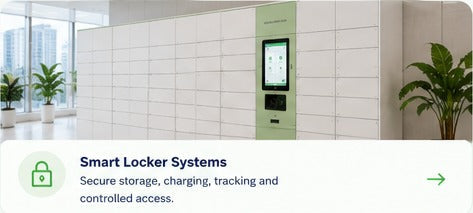
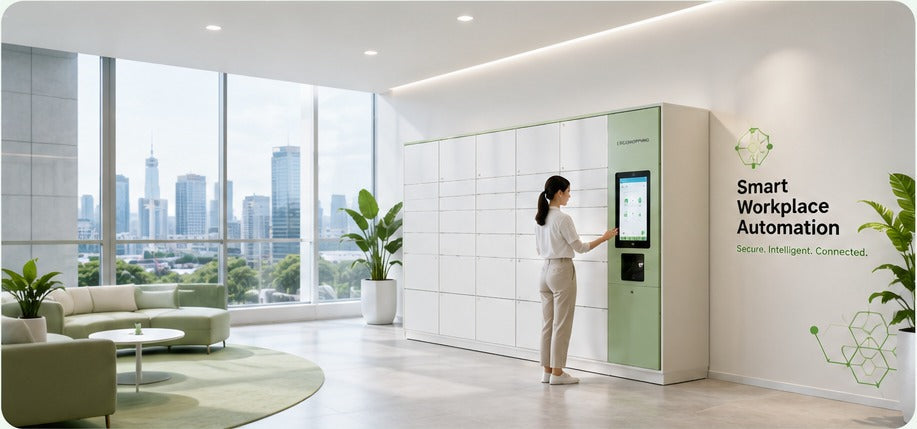
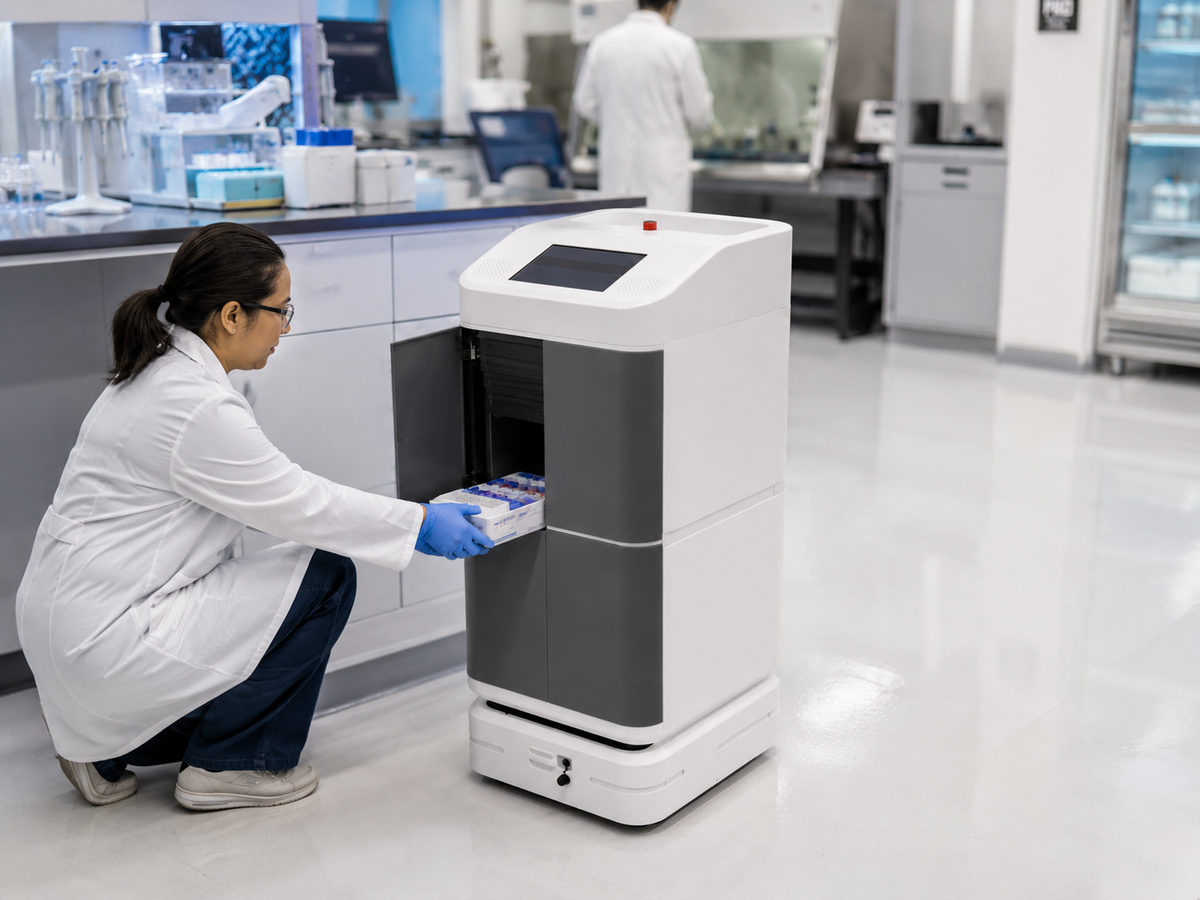
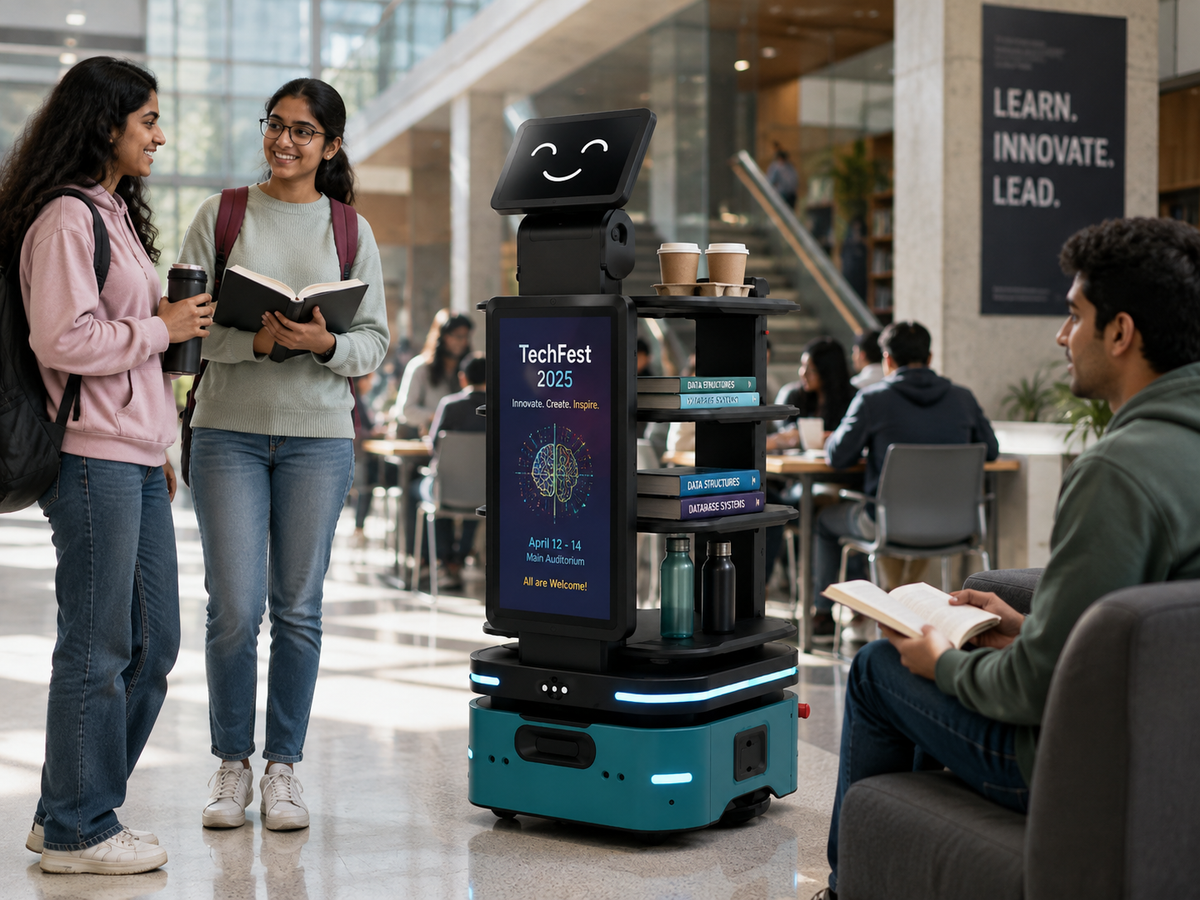
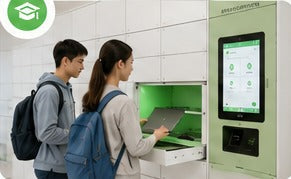
Connected automation allows institutions to place the right layer at the right point in the journey. An AI avatar kiosk can answer general campus questions and guide a student to the right office. A smart locker can hold ID cards, laptops, parcels or repaired devices for pickup. A delivery robot can move materials between departments. A charging cart or cabinet keeps loaner devices controlled, charged and ready.
- Admissions and front-desk wayfinding
- Library and IT asset issue / return
- Campus parcel, document and device handover
- Department-to-department transport support
- Device readiness for digital learning spaces

Where RIFE technologies fit inside a university
At the public-facing layer, AI kiosks help students, parents, alumni and visitors get immediate answers about locations, services, schedules and next steps. In the operational layer, smart lockers and RFID-enabled storage bring control to equipment lending, parcel distribution and sensitive handovers. In the mobility layer, delivery and cleaning robots take over repetitive movement and housekeeping support.
These systems do not need to be deployed everywhere on day one. Many universities start with one clear use case: admissions-day help, library device management, hostel parcel lockers, lab equipment issue-return or campus service delivery. Once the workflow proves useful, the institution expands the same logic to more sites.
- Admissions building: visitor help and wayfinding
- Library: laptop / tablet circulation and support
- Hostels: parcel and key handover workflows
- Labs: controlled movement of low-risk materials and supplies
- Student services: queue reduction and self-service guidance

A practical phased rollout model
The most successful projects usually start with one measurable workflow rather than a campus-wide promise. For example, a university may begin with an admissions support kiosk plus a student-document pickup locker, or a library device-lending station supported by charging carts and secure lockers. The project team learns what questions users ask, what exceptions require human staff and what operational data matters.
After the pilot, the same design principles can be extended to additional buildings and workflows. This staged approach reduces risk, keeps the budget tied to visible outcomes and helps IT, administration and facilities teams define ownership for each part of the system.
- Pilot one building or one student-service workflow first
- Define which tasks stay public and which require authenticated access
- Separate information workflows from personal-record workflows
- Plan ownership: IT, facilities, operations, library or student services
- Scale only after usage patterns and staffing rules are clear

Planning a smarter campus workflow?
Tell Rife which campus area you want to improve first—admissions, library, labs, hostels, IT asset control or delivery support—and we can recommend the right mix of kiosks, lockers, charging systems and robotics.
Talk to Rife