Hospital Delivery Robots: Medicine, Supplies and Internal Logistics
Hospital robots create value when they remove repetitive internal transport while preserving control, traceability and clinical priorities.

Hospitals move a large variety of items every day: medicines, consumables, samples, documents, food, linen and sterile supplies. Many of these routes are repetitive and time-sensitive. A hospital delivery robot can support selected workflows, but healthcare requires stricter operating rules than a restaurant or hotel.
Good hospital robot use cases
- Pharmacy to nursing-station deliveries
- General consumables and sealed supplies
- Food and linen movement
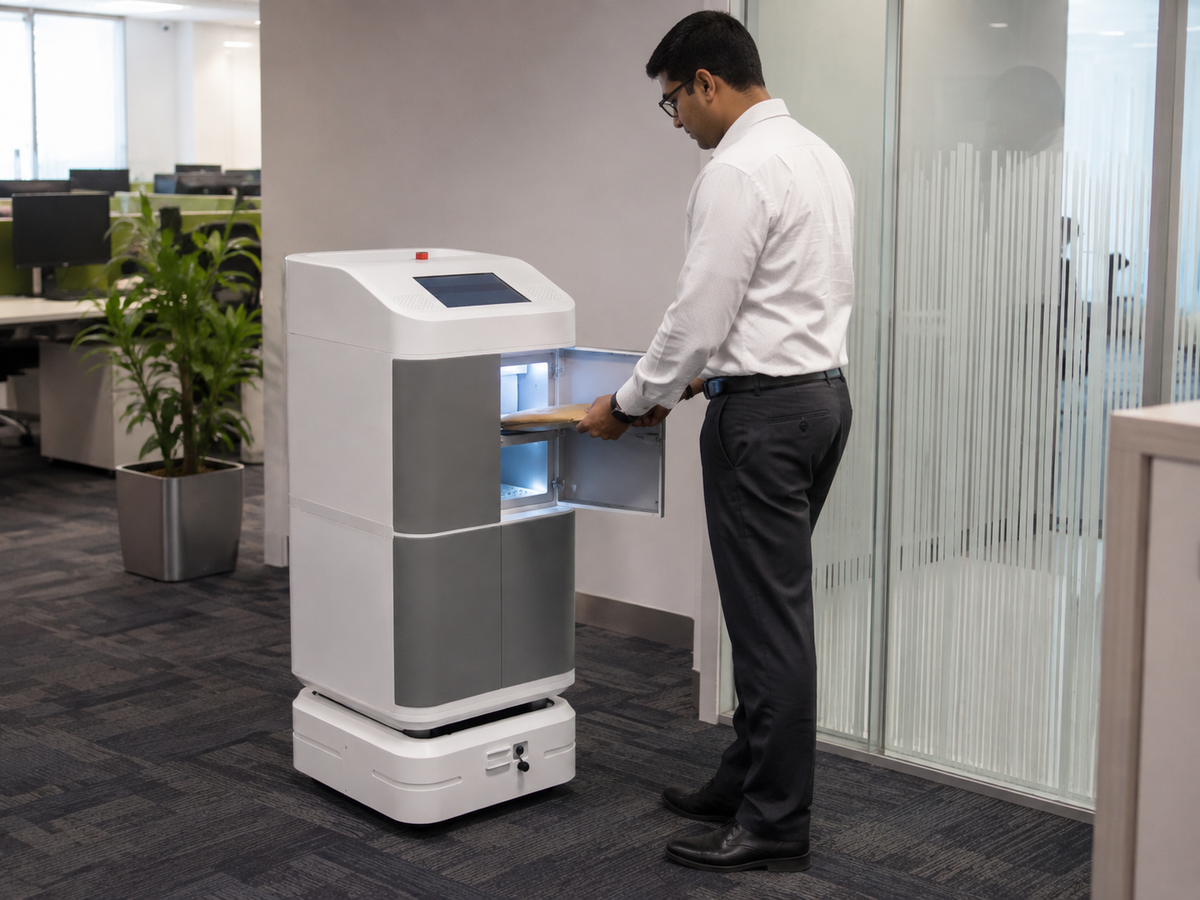
- Documents and internal requests
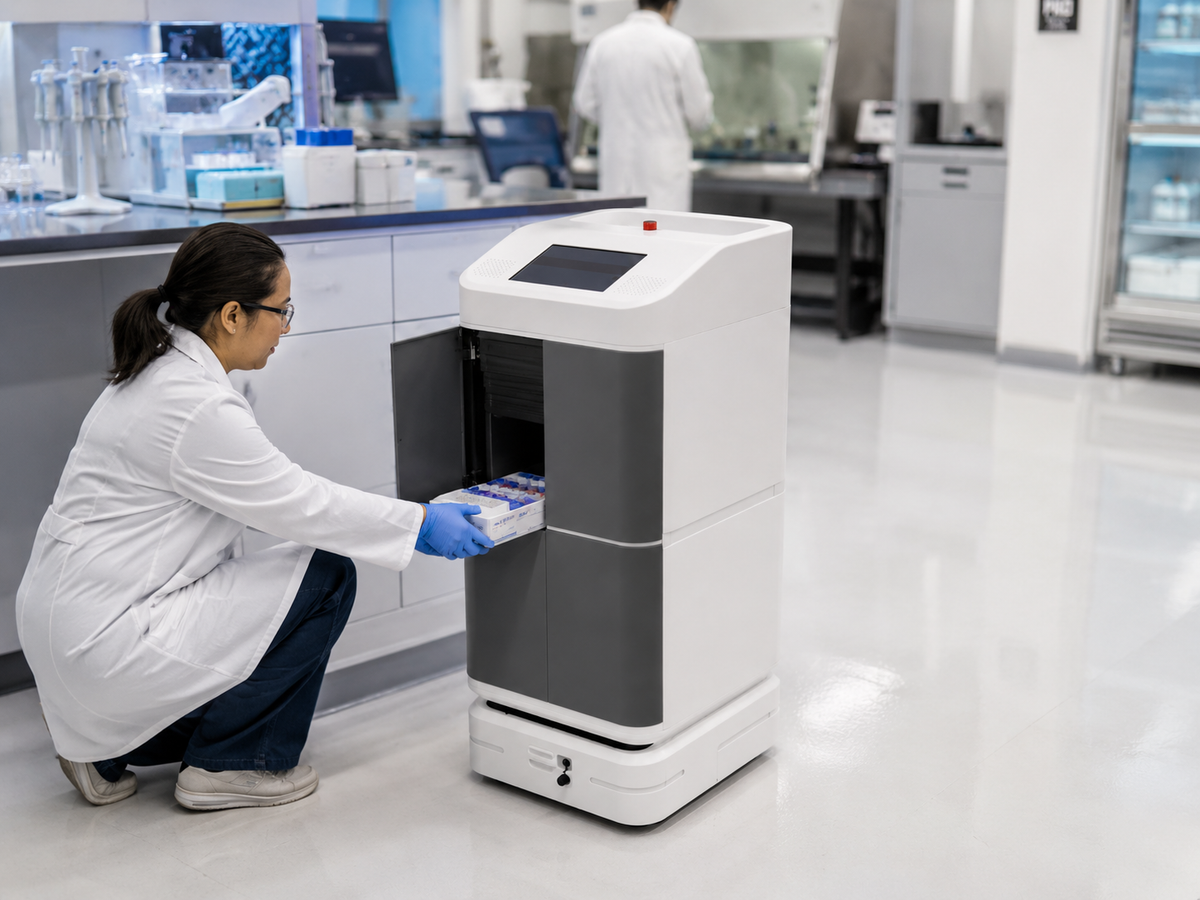
- Selected sample movement where hospital policy permits
Why secure compartments matter
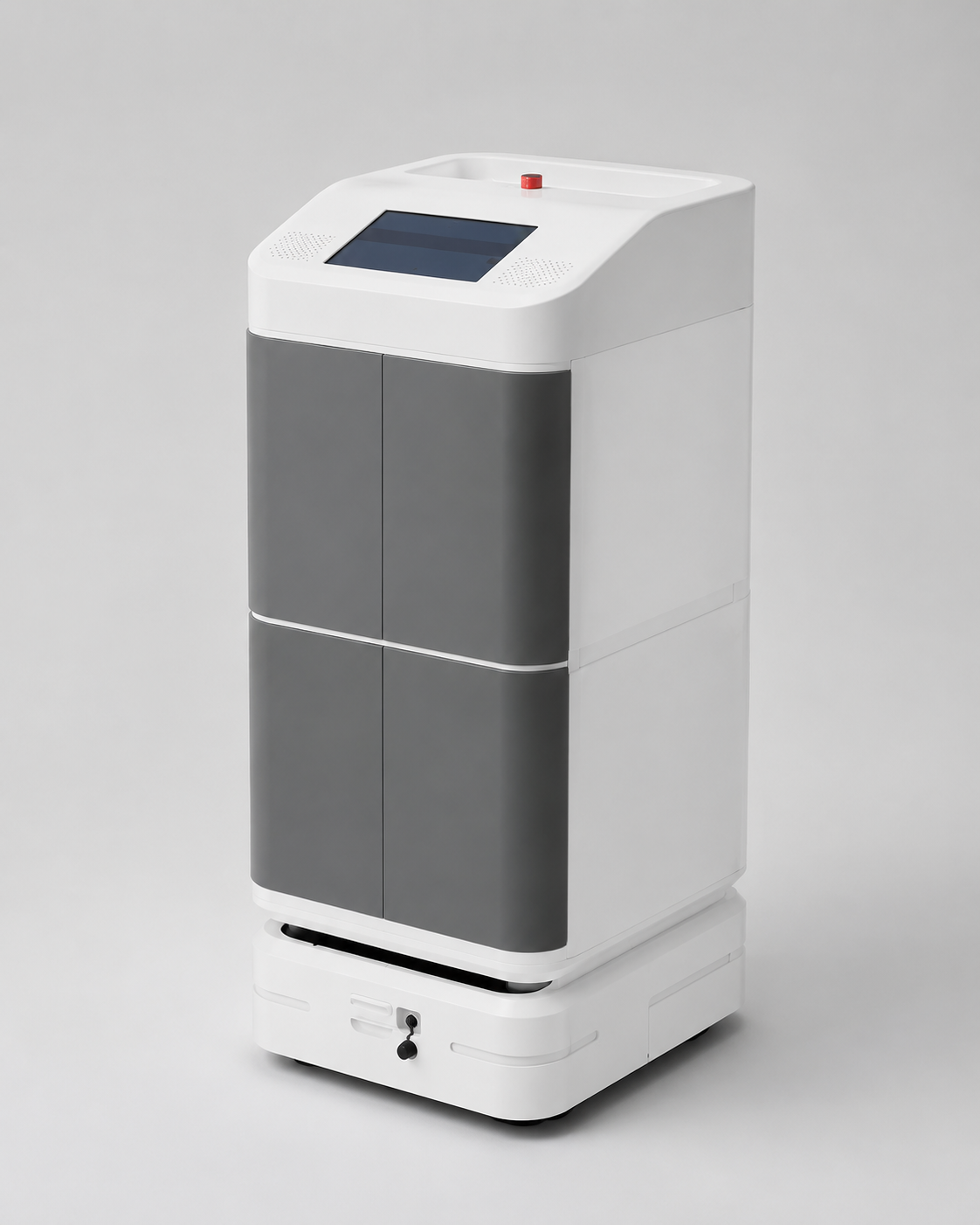
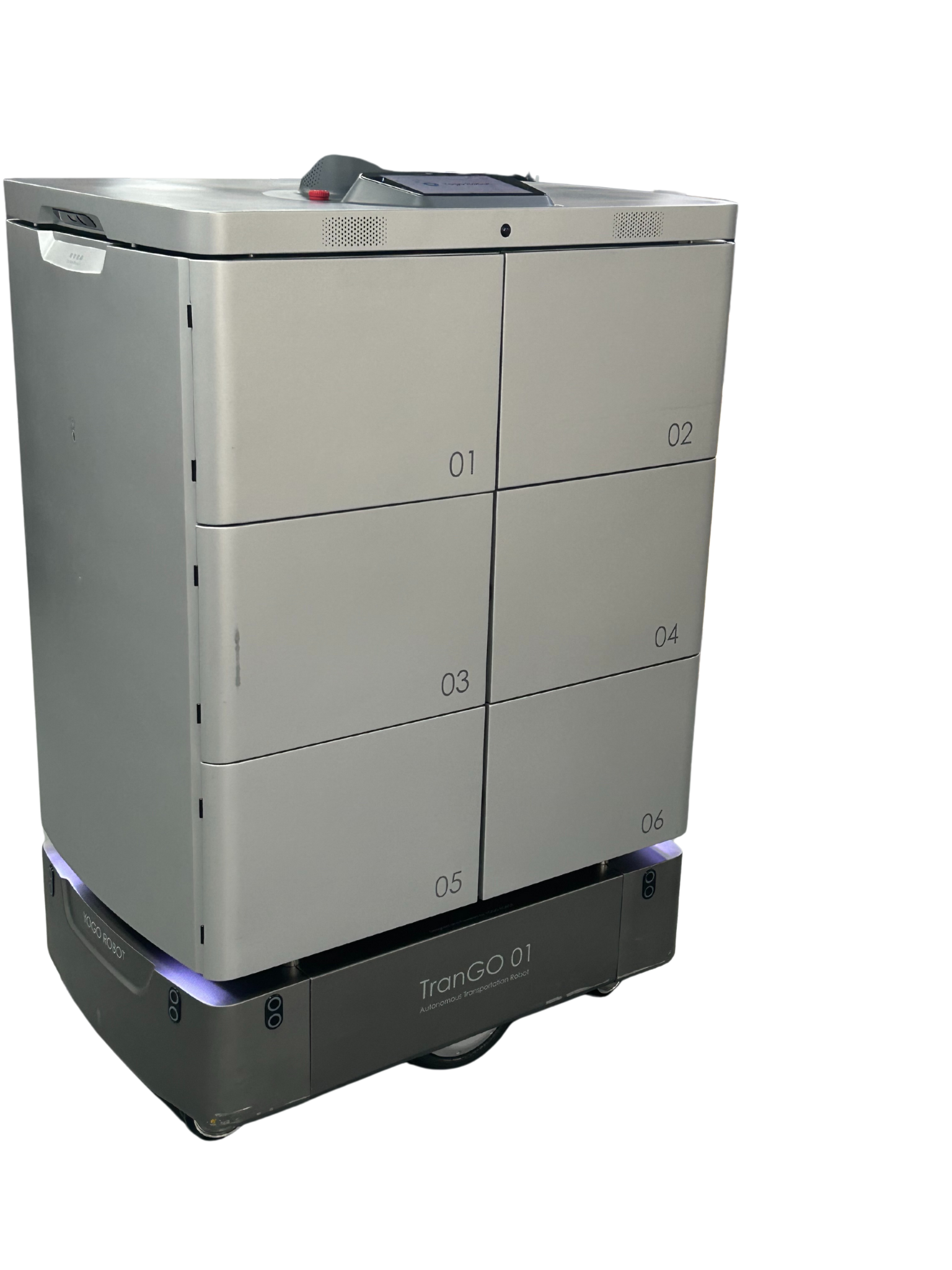
Closed compartments can separate payloads and restrict access until the robot reaches the authorised destination. Access methods, logging and integration requirements depend on the project and should be validated against hospital policy.

Workflow design matters more than speed
A healthcare pilot should define who can load the robot, which payloads are permitted, who receives them, what is logged and what happens if the destination is unavailable. It should also address cleaning, infection-control rules, corridor traffic and emergency-priority behaviour.
Start with low-risk, high-frequency routes
General supplies, food, linen or internal documents are often easier first pilots than sensitive medicine or specimen workflows. Once navigation and operational ownership are proven, more controlled payload classes can be evaluated with clinical, pharmacy, security and IT stakeholders.
- Trips completed per shift
- Average delivery time
- Staff runner time avoided
- Failed or interrupted trips
- Handover accuracy
- Cleaning and maintenance workload
Assess a hospital robot workflow
RIFE can help map the route, payload, handover and compartment requirements for a controlled pilot.
Request Healthcare Assessment