1. What is naked-eye 3D display technology?
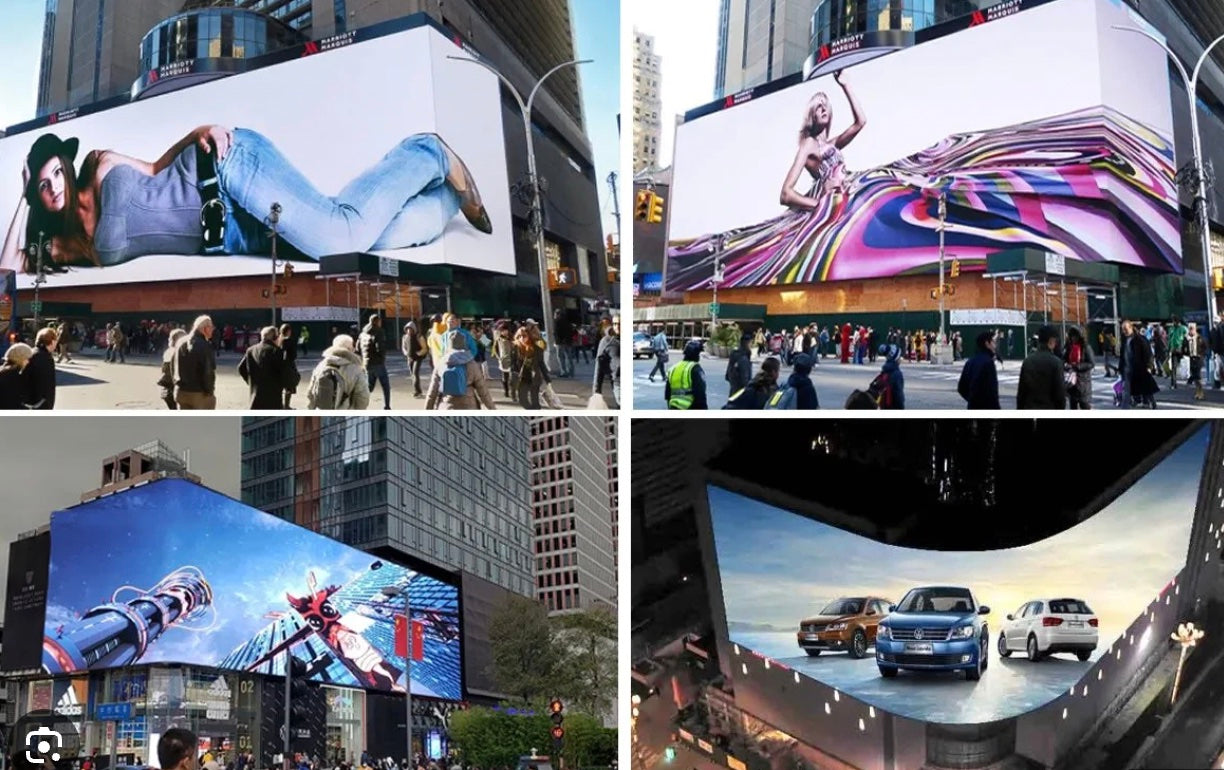
Answer: Naked-eye 3D display technology is a visual innovation that allows viewers to experience three-dimensional images and videos without the need for special glasses or equipment. By projecting multiple views of an image from different angles, it creates a sense of depth and space, allowing the human brain to perceive a realistic, 3D effect using only the bare eyes.
2. How does a naked-eye 3D LED screen work without glasses?
Answer: This technology works by utilizing "human eye parallax"—the natural distance between our left and right eyes. When a 3D LED display (often installed at a 90° angle) shows two different perspectives of the same image, the brain merges them into a single three-dimensional object. This creates a powerful visual illusion of depth, especially when viewed from a specific corner or angle.
3. Why is naked-eye 3D advertising more effective than traditional 2D ads?
Answer: Naked-eye 3D advertisements offer a higher Return on Investment (ROI) because they effectively break "aesthetic fatigue." According to big data, 3D displays capture more attention than traditional 2D print or digital ads. Their unique creativity and "wow factor" also make them highly shareable, often leading to double the exposure through viral sharing on social media networks.
4. What are the technical requirements for a high-quality 3D LED billboard?
Answer: To achieve a stunning naked-eye 3D effect, an LED display requires:
- High-definition pixels and high contrast: For realistic and delicate imagery.
- High refresh rate and grayscale: To ensure smooth video transitions and depth.
- HDR Support: For more vivid color and lighting.
- Durability: Outdoor screens must be waterproof, windproof, and lightweight to ensure safety and longevity on building exteriors
5. Where is the best position to view a naked-eye 3D LED display?
Answer: The most "perfect" 3D effect is typically achieved at the corner of the installation. Most 3D LED billboards use two screens joined at a 90° angle or a curved corner. When an observer stands at this intersection, their eyes can process content from both screens simultaneously, which maximizes the visual difference and creates the most immersive 3D experience.