The Rise of Airport Robotics: Revolutionizing Passenger Experience and Operational Efficiency

Airports are undeniably the beating hearts of global connectivity. They are sophisticated, bustling ecosystems where speed, accuracy, and safety are paramount. However, for the average traveler, the airport environment can often feel overwhelming—characterized by long queues, complex navigation, and the stress of tight schedules. As travel volumes surge across high-growth regions like India, the Middle East, and Southeast Asia, airport operators are facing a critical challenge: How do you manage increasing footfall without compromising the passenger experience?

The answer lies in automation and Artificial Intelligence. We are witnessing the dawn of the "Smart Airport," where service robots are transitioning from futuristic novelties to essential infrastructure. From check-in counters to boarding gates, AI-powered robots are redefining how airports operate, ensuring that the journey is as seamless as the destination.
Why Airports Are Embracing the Robotic Revolution
The integration of robots into aviation infrastructure is not merely a gimmick; it is a strategic necessity. Modern airports are adopting robotics to solve specific, high-friction problems that plague traditional terminal operations.
1. Combating Congestion and Managing Crowds
One of the most significant pain points in aviation is congestion. Bottlenecks at security, immigration, and check-in desks cause delays that ripple through the entire flight schedule. Robots are acting as dynamic flow managers. By using sensors and AI, they can detect forming crowds and proactively move to those areas to guide passengers into alternative lines or waiting zones. They assist in:
-
Active Queue Management: Directing passengers to less crowded counters.
-
Navigation: acting as mobile signposts that move where they are needed most.
-
Updates: Announcing gate changes or delays instantly to specific zones, preventing mass confusion.
2. The Evolution of Self-Service
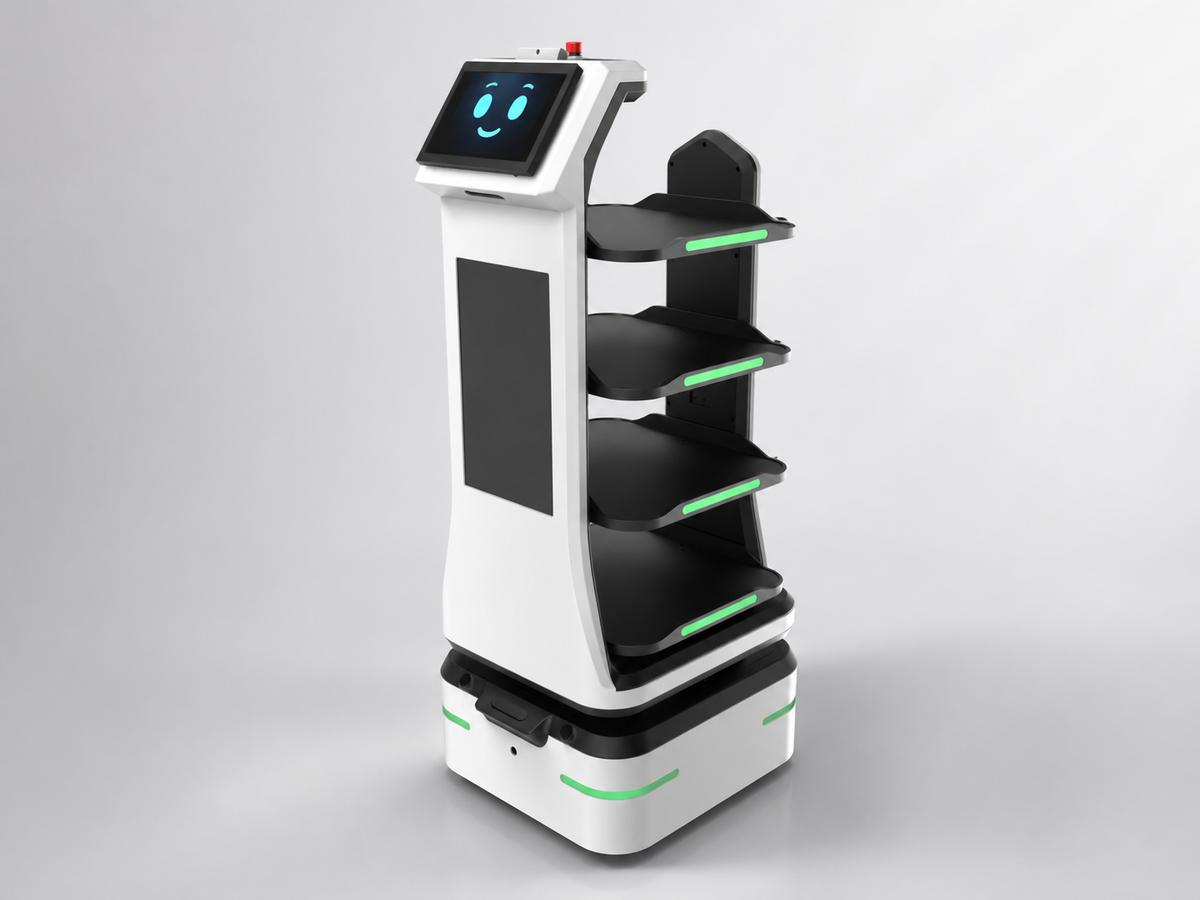
The modern traveler prefers autonomy. The era of waiting for a staff member to print a boarding pass is fading. Robots are taking self-service to the next level by acting as mobile kiosks. They serve as virtual check-in assistants and baggage drop helpers, allowing passengers to complete necessary procedures while on the move. By handling routine queries and tasks, robots free up human ground staff to handle complex issues, ensuring that passengers receive accurate instructions instantly without needing to hunt for an information desk.
3. Breaking the Language Barrier
Airports are the ultimate melting pots, serving travelers from every corner of the globe. Communication breakdowns are a leading cause of passenger stress. Human staff cannot be expected to speak every language, but robots can. Equipped with Natural Language Processing (NLP), modern airport robots can communicate fluently in English, Hindi, Mandarin, Arabic, French, Spanish, and dozens of other languages. This capability is a game-changer for international hubs, ensuring that a tourist from Beijing in a Dubai airport, or a traveler from France in a Mumbai terminal, feels understood and guided.
4. Real-Time Flight Intelligence
Static flight information screens are useful, but they require the passenger to find them. Robots bring the information to the passenger. Integrated directly with the airport’s Flight Information Display System (FIDS), these robots display real-time flight timings, gate numbers, and delay alerts on their screens. Furthermore, they can answer specific queries like, "Where is Belt 4?" or "Has the gate for flight AI-101 changed?" providing data that is accurate to the second.
5. Precision Indoor Navigation
Large international airports can be labyrinthine. Missing a flight because one couldn't find the gate is a traveler’s worst nightmare. Robots are now acting as sophisticated indoor GPS systems. Unlike a map on a phone, a robot can physically guide a passenger. They can say, "Follow me," and lead a passenger from the duty-free section directly to their boarding gate, adjusting their speed to match the passenger’s pace.
Key Use Cases: Where Robots Make an Impact
The versatility of airport robots allows them to be deployed across various touchpoints in the terminal.
The Warm Welcome: Passenger Greeting & Information
The "meet and greet" is the first impression a passenger has of an airport. Robots stationed at terminal entrances act as mobile concierges. They answer Frequently Asked Questions (FAQs) that usually clog up information desks, such as:
-
"Where is the check-in counter for Emirates?"
-
"Where is the nearest washroom?"
-
"How do I get to the immigration zone?"
-
"Where can I find a currency exchange?"
By automating these repetitive interactions, airports ensure every passenger receives a consistent, polite, and accurate answer, regardless of the time of day.
Streamlining Security Protocols
Security checks are often the most stressful part of the journey. Robots are being deployed effectively to lower anxiety and speed up throughput. Before passengers even reach the metal detectors, robots can offer visual and audio instructions regarding:
-
Divesting metallic items and electronics.
-
Liquids and aerosols restrictions.
-
Queue discipline.
When passengers are better prepared before they reach the belt, the entire line moves faster.
Autonomous Hygiene and Cleaning
Post-pandemic, hygiene is no longer visible—it is scrutinized. Autonomous cleaning robots have become a common sight in top-tier airports. These machines work 24/7, scrubbing floors in lounges, gate areas, and hallways. Many are equipped with UV-C disinfection lights to sanitize surfaces in washrooms and seating areas. This not only ensures a pristine environment but also signals to passengers that their health safety is a top priority.
Next-Gen Baggage Handling
The anxiety of "lost luggage" is real. Robots are intervening to provide transparency. On the passenger side, robots in arrival halls assist travelers in identifying luggage belts and tracking missing bags via barcode scanning. Behind the scenes, Autonomous Guided Vehicles (AGVs) are revolutionizing baggage transport, moving luggage from check-in to the aircraft with higher precision and fewer errors than manual handling.
Boosting Retail and F&B Revenue
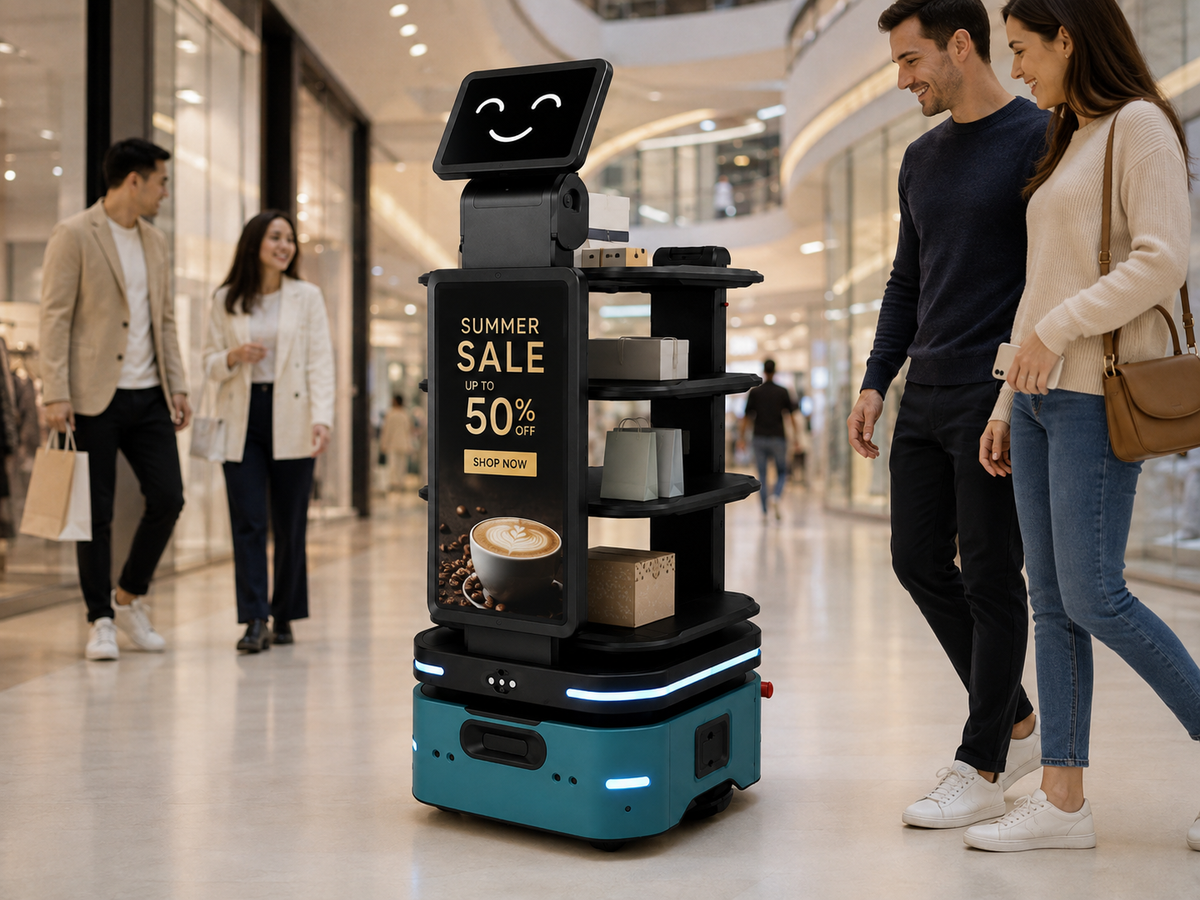
Airports are increasingly becoming shopping destinations. Robots act as mobile marketers for duty-free shops, lounges, and restaurants. They can roam waiting areas, displaying menus or exclusive offers on their screens, and guide interested passengers directly to the store or restaurant. This proactive approach drives footfall to retail partners, increasing non-aeronautical revenue for the airport.
The Strategic Benefits for Airport Operators
The adoption of robotics offers a tangible Return on Investment (ROI) for airport authorities.
1. Faster Passenger Movement: By reducing bottlenecks and confusion, robots increase the "throughput" of the terminal. An efficient airport can handle more flights and more passengers per hour.
2. Operational Cost Optimization: While the initial investment in robotics is significant, the long-term savings are substantial. Robots reduce the need for manual staff for repetitive, low-skill tasks (like standing at a corner pointing toward the elevators), allowing airports to optimize their workforce budget.
3. Enhanced Brand Image: In a competitive aviation market, perception matters. Airports utilizing robotics are viewed as modern, premium, and technologically advanced. This "Smart Technology" image attracts top-tier airlines and high-value travelers.
4. Elevated Passenger Experience: Ultimately, a happy passenger spends more and complains less. By offering support that is always available, multilingual, and accurate, airports significantly boost their service quality ratings (ASQ).
The Future of Aviation Robotics
We are only scratching the surface of what is possible. As AI and sensor technology evolve, the role of robots in airports will expand dramatically.
-
Biometric Integration: Future robots will likely integrate with facial recognition systems to perform "on-the-move" security scanning or immigration checks, eliminating stationary booths entirely.
-
Heavy Lifting (Porter Bots): We will see the rise of "follow-me" luggage robots that carry heavy suitcases for passengers, particularly benefiting the elderly or families.
-
Emergency Response: Robots equipped with thermal cameras and hazard sensors will act as first responders, detecting fires, medical emergencies, or security breaches before humans can.
Conclusion
The integration of robots into airport ecosystems is not a trend; it is a transformation. By bridging the gap between digital data and physical assistance, robots are solving the age-old problems of congestion, communication, and navigation.
For airports in India, the Middle East, and Southeast Asia, where passenger numbers are skyrocketing, robotics offers a scalable solution to maintain efficiency and safety. As we look to the future, the airports that stand out will be those that embrace this technology—creating a travel environment that is not just a transit point, but a seamless, automated, and welcoming experience. The future of flight is here, and it is autonomous.
1. How do robots improve the passenger experience at airports?
Robots reduce stress by providing instant navigation, managing queues to prevent overcrowding, offering real-time flight updates, and ensuring cleaner facilities through autonomous sanitation.
2. Can airport robots speak multiple languages?
Yes, modern robots use AI and Natural Language Processing (NLP) to communicate fluently in dozens of languages, including English, Hindi, Arabic, and Mandarin, breaking down communication barriers for international travelers.
3. Will robots replace human staff at airports?
Not entirely. Robots are designed to handle repetitive tasks like answering FAQs and cleaning. This frees up human staff to focus on complex customer service issues and security tasks that require human judgment.
4. How do robots assist with airport security?
They help speed up the process by managing queues and instructing passengers on security rules (like removing laptops or liquids) before they reach the scanning belt. Future robots may also perform biometric scanning.
5. Can robots help me with my luggage?
Currently, they help you find baggage belts and track missing bags. In the near future, autonomous "porter bots" will be deployed to physically carry heavy luggage for passengers, especially the elderly and families.